Located in southern Africa, Zambia boasts of diverse landscapes, from the high central plateaus, fertile valleys, and the dry plains in the south.
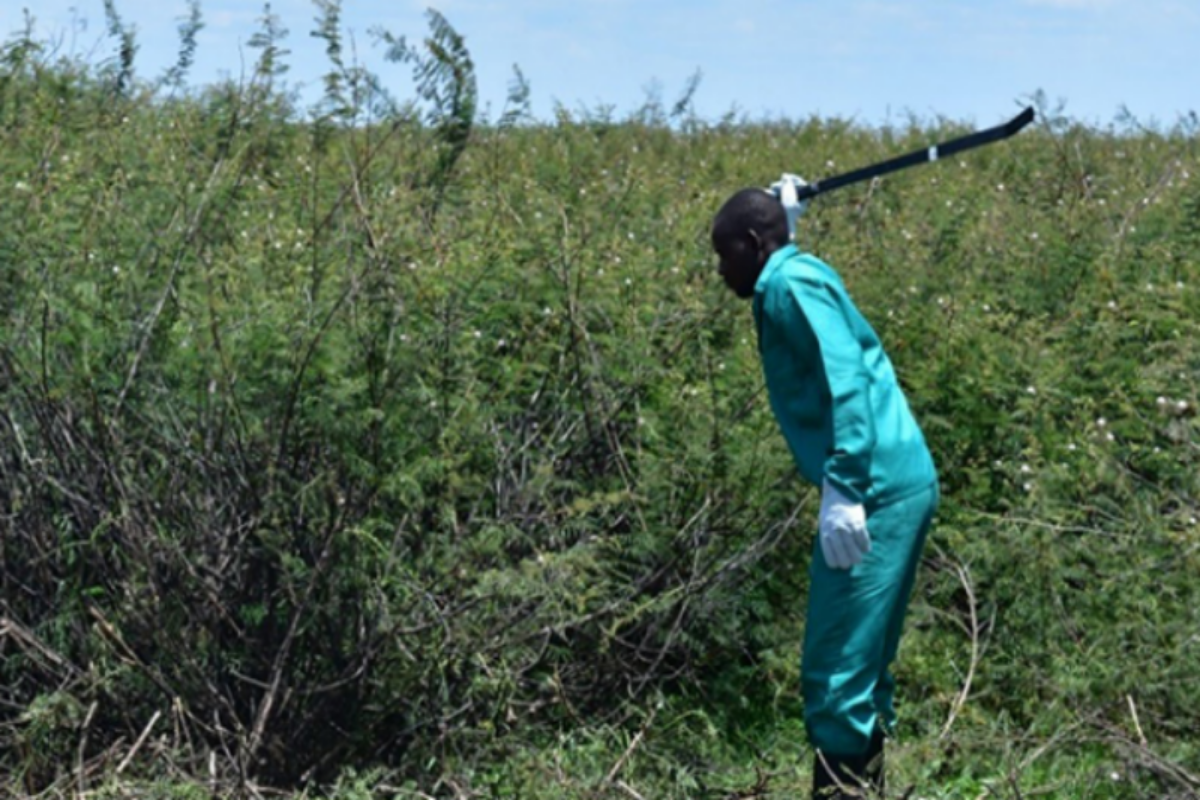
These diverse terrains, warm temperatures, seasonal rains, and nutrient-rich soils shape both the bounty of the crops and the growth of native and invasive weeds.
The weeds compete for space and other important nutrients, and in some cases, they can spread aggressively on farmlands and natural habitats.
Here, we explore the 25 most common weeds in Zambia, describing where they thrive, their unique features, and the best methods to remove them.
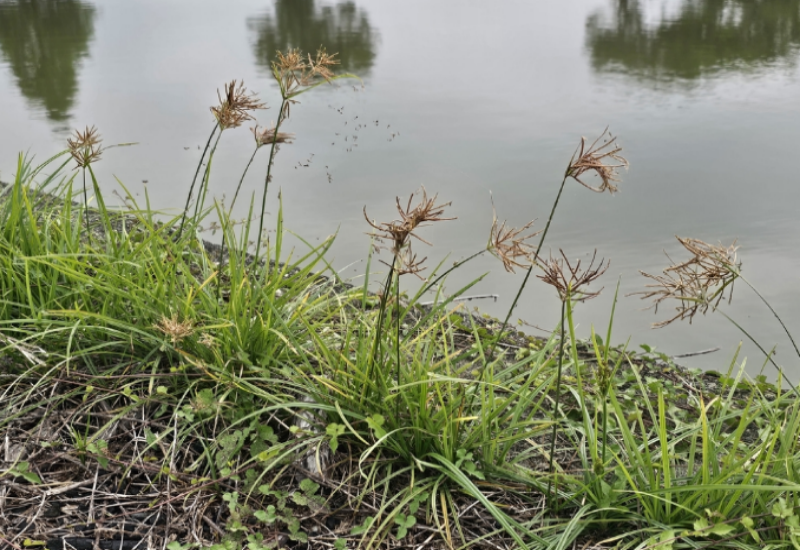
1. Purple Nutsedge (Cyperus rotundus)
- Local Name: Purple Nutsedge
- Family: Cyperaceae
- Annual or Perennial: Perennial
Purple Nutsedge is a perennial weed that can grow up to 1m high. It is commonly found in maize and rice fields, and permanent or seasonally wet areas.
You can identify the weed by its thick and stiff leaves arranged in sets of threes from the base. The spikelets (3-15) are reddish to purplish brown, slightly flattened, and arranged on dense clusters.
Removing the young plants before they develop tubers is the best strategy to reduce the sedge population. Aim to dig out the plants before they develop 5-6 leaves, and eventually the reserves will dry out.
Increasing shade and improving irrigation practices to prevent unnecessary waterlogging conditions can also help control Purple Nutsedge.
2. Blackjack (Bidens pilosa)

- Local Name: Nakasopyo, Sokotela, or Kanunka
- Family: Asteraceae
- Annual or Perennial: Annual
Blackjack is an annual to short-lived perennial that can be found in gardens and potatoes, beans, and cotton fields.
The upright herb has opposite leaves and distinct barbed seeds that cling to animal fur and human clothing.
While it is known to be a beneficial vegetable with numerous anti-inflammatory and skin benefits, Nakasopyo is also considered a pesky weed in Zambia.
Mechanical control methods like manual weeding when the plants are small, mulching, and intercropping are enough to eradicate the weeds. However, if you’re dealing with large infestations, simazine and glyphosate products can provide effective control.
3. Napier Grass (Cenchrus purpureus)

- Local Name: Napier Grass, Elephant Grass, Uganda Grass, or Senjele
- Family: Poaceae
- Annual or Perennial: Perennial
Napier Grass is a perennial clumping grass that forms dense stands up to 4m tall. It is commonly grown as a forage, hay, and silage crop for feeding livestock.
However, Elephant Grass can be invasive in irrigation systems, fallow lands, and riparian areas. Cutting and digging to remove the rhizomes, followed by glyphosate applications for regrowth, will remove the grass.
4. Giant Salvinia (Salvinia molesta)

- Local Name: Kariba Weed
- Family: Salviniaceae
- Annual or Perennial: Perennial
The weed is named after its common sighting in Lake Kariba along the Zambezi River. Salvinia molesta is a troublesome aquatic fern that forms dense mats on water surfaces.
The mats block oxygen and sunlight, choking fish and other aquatic plants. Additionally, the vegetation also impedes fishing, boating, and swimming, and also clogs irrigation channels.
Despite eradication efforts such as the introduction of weevils, herbicide applications, and other long-term strategies, the weed has proven difficult to eradicate due to its highly invasive and troublesome nature.
5. Couch Grass (Cynodon dactylon)

- Local Name: Couch Grass
- Family: Poaceae
- Annual or Perennial: Perennial
Couch Grass is a native perennial grass that forms dense mats through underground runners and spreading rhizomes.
In Zambia, it is a common weed in maize fields, roadsides, and pastures. Some farmers use improved varieties as pasture, but the wild form is often considered a serious weed due to its quick spreading habit and competition with crops.
Hand-pulling may be viable for small infestations, while repeated cultivation and herbicide treatments may be needed for larger infestations.
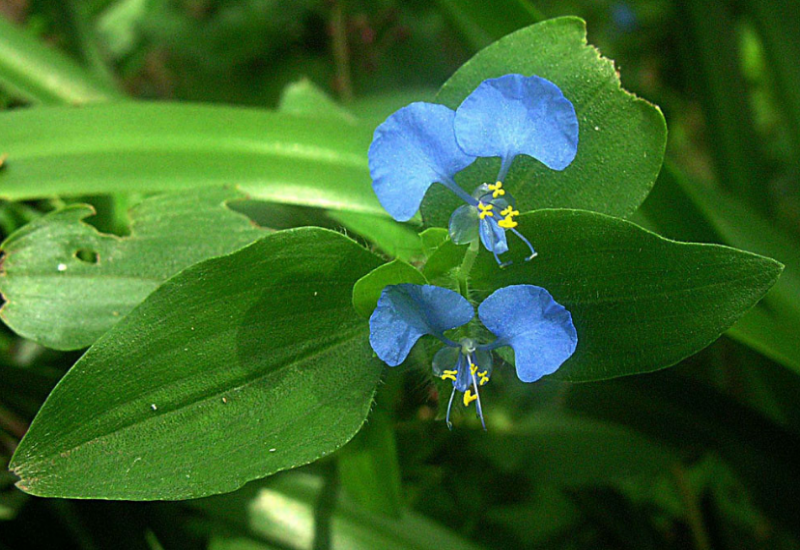
6. Wandering Jew (Commelina benghalensis)
- Local Name: Wandering Jew, Bhengal Wandering Jew, or Benghal Dayflower
- Family: Commelinaceae
- Annual or Perennial: Annual or Perennial
Wandering jew is an annual or perennial weed with succulent stems and blue flowers, and can grow up to 1m tall. The weed invades grasslands, roadsides, open woodlands, and disturbed sites.
It is also considered a serious weed of cultivated root crops and vegetables. Wandering Jew is also a known host for destructive viruses and pests, potentially adding more agricultural damage.
Pulling out the young plants is possible, but only effective if all the roots and underground flowers are removed.
Multiple herbicide treatments are often required to treat seedlings, while the mature plants have shown persistent resistance to glyphosate and other products.
7. Pigweed (Amaranthus spp.)

- Local Name: Pigweed
- Family: Amaranthaceae
- Annual or Perennial: Annual
Several species of Pigweed can be found in various natural habitats and cultivated fields in Zambia. These robust annuals are a favorite vegetable, but they are also competitive pests in maize fields.
Hand-pulling or hoeing the young plants is typically effective, as they are often cooked as a vegetable.
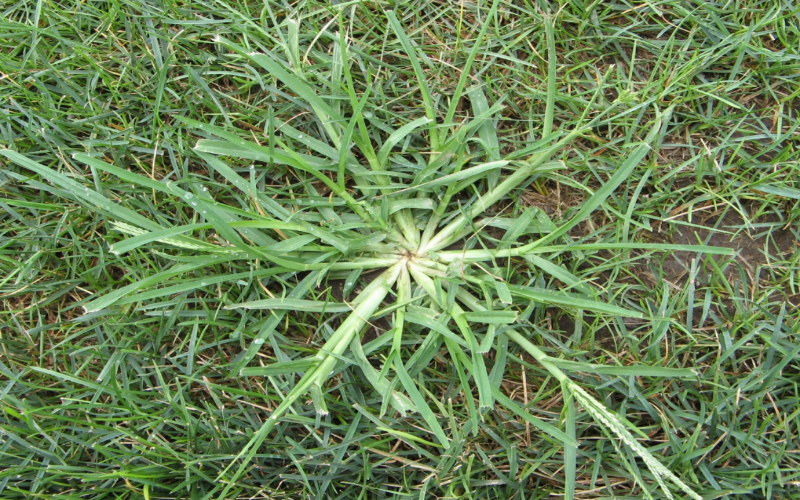
8. Goosegrass (Eleusine indica)
- Local Name: Kalolo or Lukata
- Family: Poaceae
- Annual or Perennial: Annual
The tufted annual grass is a common weed in Zambia’s crop fields, roadsides, pastures, stream banks, and landscapes.
It is easily identified by its finger-like seed heads, flat or folded leaves along the central vein with a boat-shaped tip, and trailing or erect stems, up to 40 cm high.
Early planting and tillage, intercropping with legumes, and minimal grazing will control the weeds in crop fields.
Repeat herbicide applications are required to control larger infestations in landscapes and other areas. Ensure to rotate the recommended products to avoid the development of resistance populations.
9. Purlsane (Portulaca oleracea)
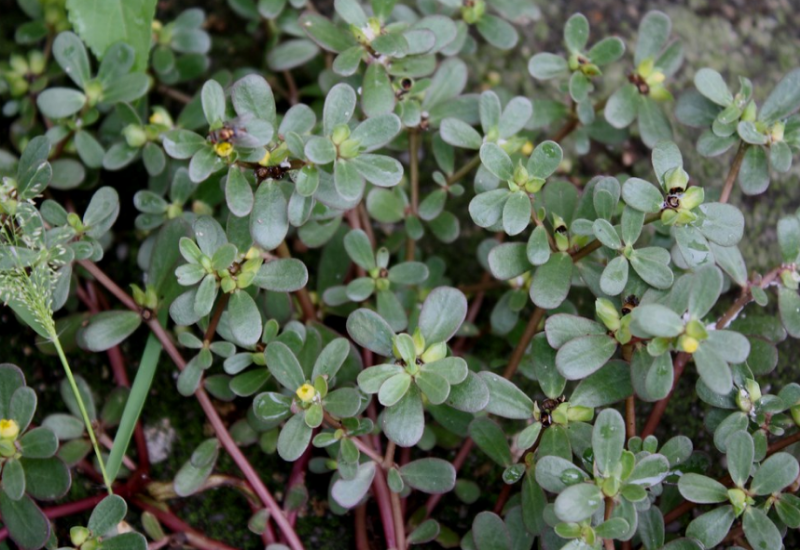
- Local Name: Common Purslane
- Family: Portulaceae
- Annual or Perennial: Annual
Common Purslane is an annual weed that can be commonly sighted in gardens and disturbed areas. It is a prostrate, succulent herb with small, broadly rounded leaves, bright yellow flowers, and stems that reach a height of 30 cm.
While it is a beloved vegetable in many parts of the country, it can also become a pesky weed if unwanted.
To effectively control Purslane, pull or hoe the plants while young or apply mulch in your garden to limit growth and spread.
10. Witchweed (Striga hermonthica)
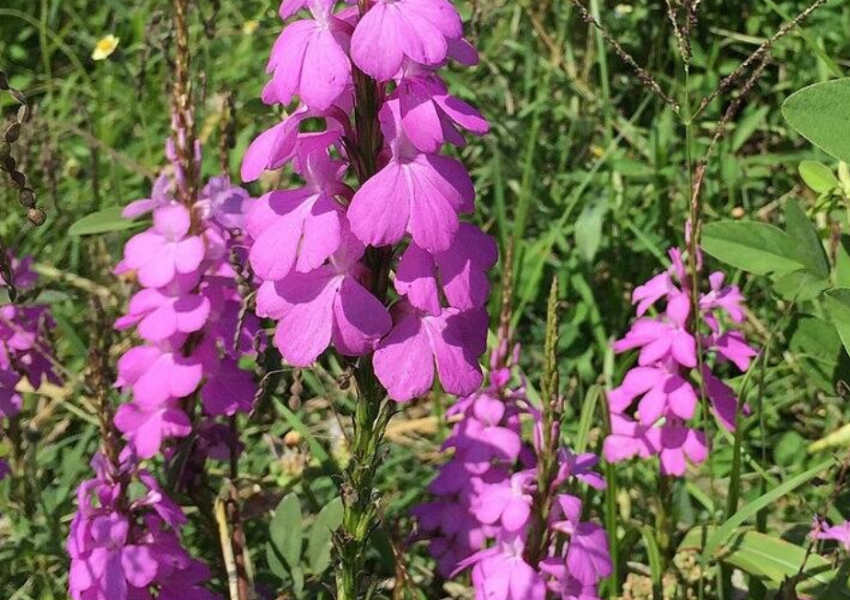
- Local Name: Witchweed, Purple Witchweed, or Striga
- Family: Orobanchaceae
- Annual or Perennial: Annual or seasonal
Witchweed is perhaps among the top dreaded weeds in Zambia. It can be traced to areas with poor rainfall and low soil fertility, including the Luangwa Valley and parts of the Southern Province.
The weed is parasitic, which means it attaches to important crops such as maize, millet, and sorghum. Striga deprives the host plant of valuable resources, causing direct damage such as stunted growth which ultimately leads to poor yields.
Once you identify the weeds, pull them out to prevent seed set for future regrowth control. Farmers are encouraged to plant certified seeds or crop varieties that are tolerant to imazapyr for effective control.
You can refer to this CABI document for more Striga hermonthica prevention measures in maize systems.
11. Visepo (Lantana camara)
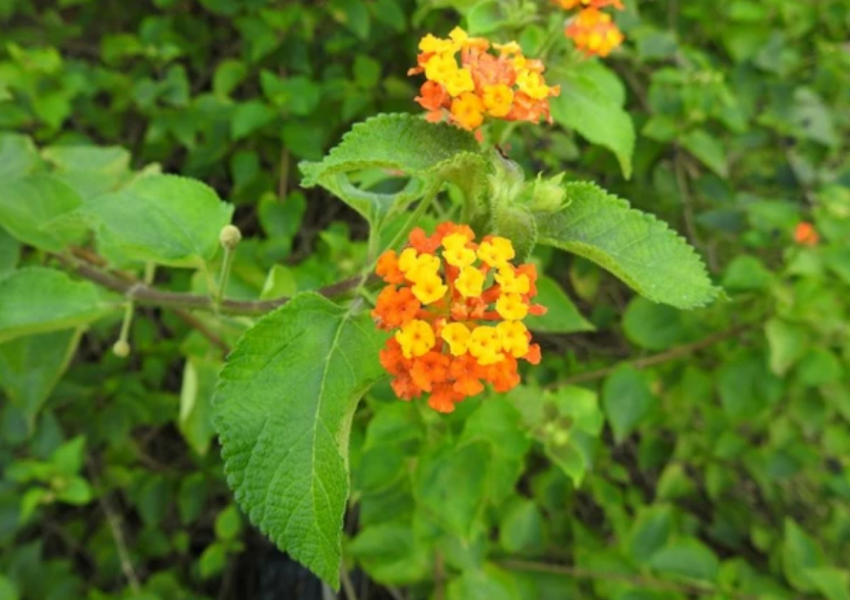
- Local Name: Visepo
- Family: Verbanaceae
- Annual or Perennial: Perennial
Visepo is an aromatic perennial shrub that can grow up to 2m tall. It can be found in many provinces, including Lusaka, the Northern Province, North West, West, and the Southern Province.
Lantana camara is a serious invader of overgrazed sites, woodlands, formerly cultivated lands, and other disturbed sites.
It is listed among the world’s worst alien invasive species for its rapid spread, high adaptability, and the extensive negative impact it has on native vegetation.
Mechanical removal is viable for small infestations or at an early growth stage of a moderate infestation. Cutting the shrubs and combining it with a non-selective herbicide application can provide better control for larger infestations.
12. Yellow Nutsedge (Cyperus esculentus)

- Local Name: Cyperus esculentus
- Family: Cyperaceae
- Annual or Perennial: Perennial
Yellow Nutsedge is a perennial weed that can be distinguished by its triangular stems and yellow-brown spikelets.
It is a common weed of gardens, crop fields, riverbanks, roadsides, irrigation canals, and disturbed areas. If left to establish, it can be a tough weed to eradicate due to its underground root network.
Hand weeding provides effective control if all the tubers are removed. Postemergence herbicides containing ingredients like glyphosate, sulfentrazone can be applied to control Yellow Nutsedge.
13. Broadleaf Plantain (Plantago major)
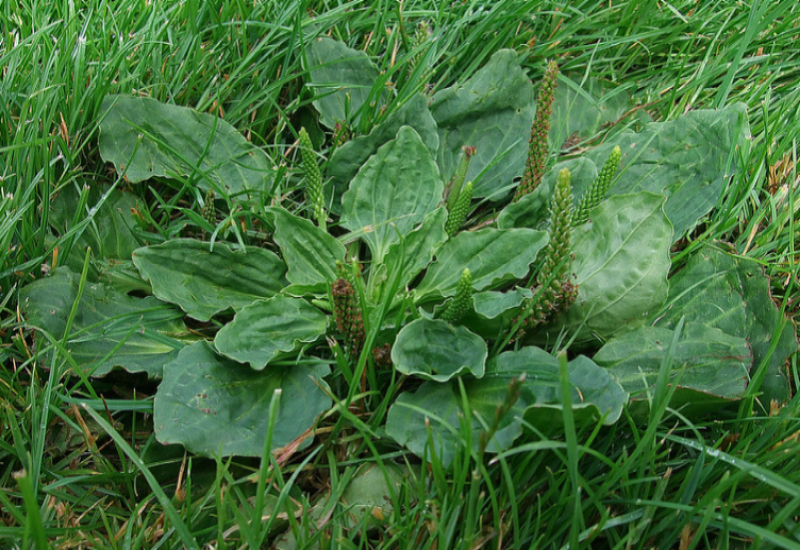
- Local Name: Broadleaf Plantain or Broad-leaved Plantain
- Family: Plantaginaceae
- Annual or Perennial: Perennial
Broadleaf Plantain is a low-growing perennial herb that can be identified by its ovate leaves that form a rosette and elongated spikes with reddish-brown capsules.
In Zambia, it is both an agricultural and an environmental weed, mainly found in row crops, gardens, pastures, and disturbed areas.
The weeds can be removed by pulling or digging, mulching, or application of non-selective herbicides like glyphosate.
14. Water Hyacinth (Eichhornia crassipes)
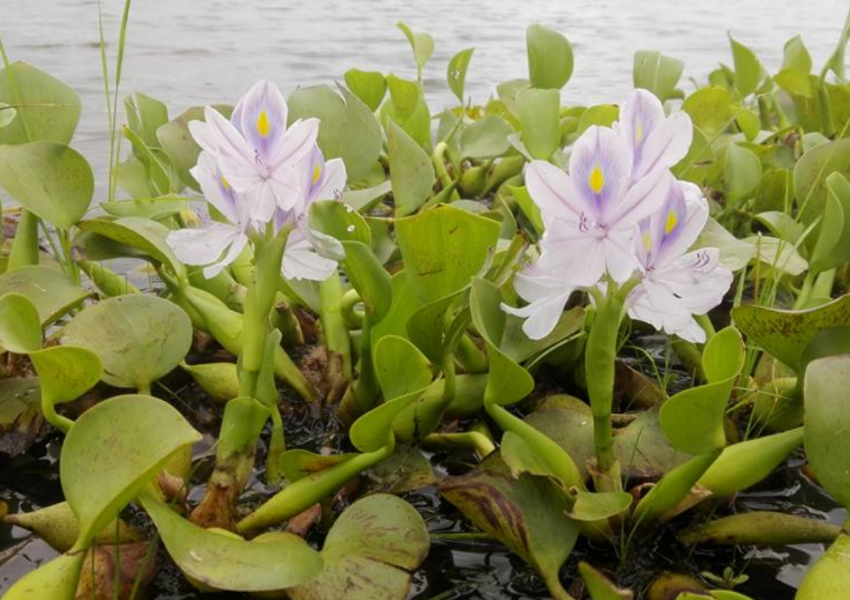
- Local Name: Water Hyacinth or Kafue Weed
- Family: Pontederiaceae
- Annual or Perennial: Perennial
The world’s worst water weed can be found in lakes and rivers such as Kafue and Zambezi.
The invasive floating weed has caused both socio-economic and ecological problems, including choking waterways, clogging hydroelectric stations, impeding transport and fishing, and harming aquatic life.
Since the weed thrives on nutrient-rich waters, several companies have since stopped discharging irrigation runoff into the waters to reduce the weed populations.
Fencing off water intakes and recurring manual removal by locals are typically the most effective and economically sustainable strategies to deal with water hyacinth.
15. Bristly Starbur (Acanthospermum hispidum)

- Local Name: Bristly Starbur
- Family: Asteraceae
- Annual or Perennial: Annual
Bristly Starbur is an annual erect herb that can grow up to 60 cm. You can identify the weed by its stiff, white hair-covered stems, oblong lanceolate leaves, and small, creamy-yellow flowers.
It is commonly found in crop fields, pastures, roadsides, disturbed land, and waste areas in the Eastern, Western, Lusaka, and Luapula provinces.
Apart from outcompeting native plant species and contaminating produce, the leaves and seeds also produce allelopathic properties that inhibit the growth of other plants.
Hand-pulling or hoeing is effective for removing weeds in fields if done before seed set. Herbicides like glyphosate can effectively remove larger infestations.
16. Common Cocklebur (Xanthium strumarium)
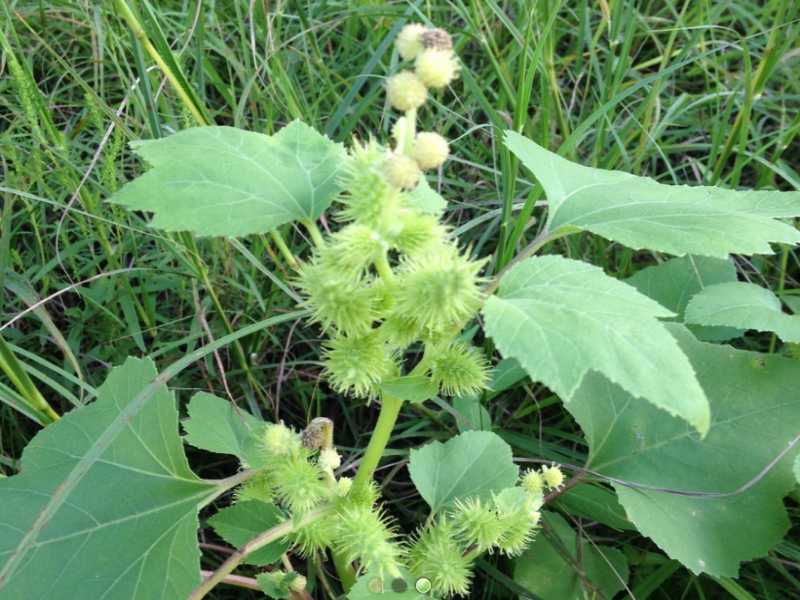
- Local Name: Common Cocklebur
- Family: Asteraceae
- Annual or Perennial: Annual
Common Cocklebur is an annual herb with spiny burs that stick to animals and clothing. You can also identify the weed by its triangular, three-lobed leaves with a distinct scent.
This weed is commonly found in the Southern Province, which experiences extended drought seasons and hosts some semi-arid areas.
However, since it can grow in most environments and tolerate various soil types, Common Cocklebur can also be found in landscapes, agricultural fields, disturbed sites, and streambanks.
Pulling out by and is viable for small infestations and only if done before bud development and seed dispersal. Ensure that you wear protective clothing as the burs can cause dermatitis.
For larger infestations, locals use selective and non-selective herbicides like triclopyr, metsulfuron, and glyphosate, depending on the infested area.
17. Mexican Clover (Ricardia scabra)
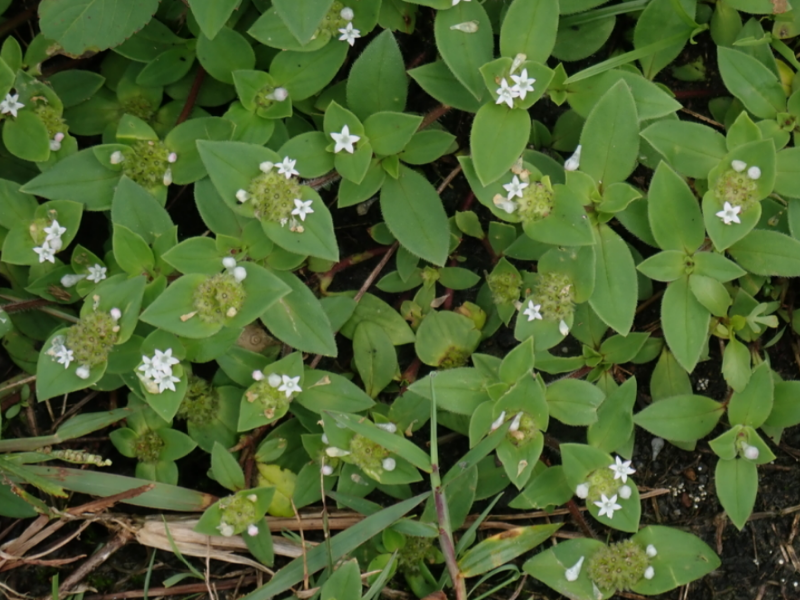
- Local Name: Mexican Clover
- Family: Rubiaceae
- Annual or Perennial: Perennial
As the name implies, the weed grows in warmer climates across the Americas and African countries, including Zambia’s Central, Southern, and Western provinces.
The weed can be distinguished by its elliptic to lanceolate leaves and 6-petaled, white flowers with triangular lobes. Mexican Clover is a common weed of cultivated land, roadsides, and disturbed sites.
Pull out or dig the weeds using a trowel if you’re dealing with a small area. Ensure to remove the entire taproot to prevent regrowth.
Herbicides like dicamba, metsulfuron, and glyphosate provide effective control if applied on young, actively growing plants.
18. Johnson Grass (Sorghum halepense)

- Local Name: Johnson Grass
- Family: Poaceae
- Annual or Perennial: Perennial
Like many other parts of the world, Johnson Grass is also a troublesome and persistent weed in Zambia. The tall perennial grass spreads by rhizomes, invading crop fields, irrigation canals, abandoned fields, roadsides, streambanks, and waste areas.
Pull out the young grass when the soil is moist to remove all the rhizomes. Ensure the removed plant fragments are disposed of correctly to prevent resprouting.
A glyphosate product can eradicate the grass in non-crop areas. Consult a local extension expert on the recommended postemergent herbicides for Johnson Grass in cultivated lands.
19. Morning Glory (Ipomoea purpurea)

- Local Name: Morning Glory
- Family: Convolvulaceae
- Annual or Perennial: Annual
Morning Glory is a trailing or climbing annual weed with showy purple flowers. It is commonly found in farmlands, gardens, roadsides, fencelines, streambanks, and waste areas.
The weed can be located in the Copperbelt region, the Northern, Western, and Lusaka provinces. Not only does it outcompete desirable crops, but it can also outgrow native vegetation, severely impacting many habitats.
Fortunately, the weed and its roots are easy to pull or dig all year round. Alternatively, cutting and spot-treating the remaining fragments with the locally recommended herbicides can also effectively control Morning Glory.
20. Wireweed (Sida acuta)
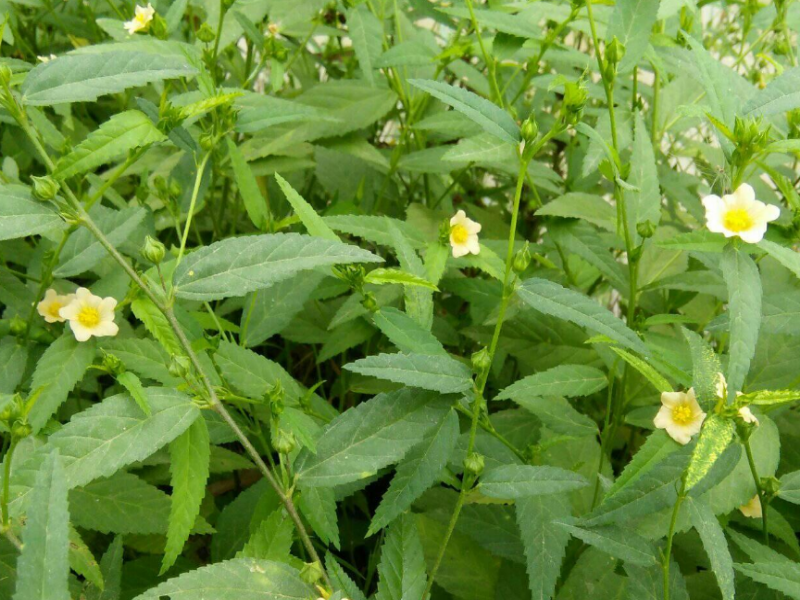
- Local Name: Wireweed, Common Wireweed, or Spinyhead Sida
- Family: Malvaceae
- Annual or Perennial: Perennial
Wireweed is a long-lived herb or small shrub that can grow up to 100-150 cm tall. You can identify it by its wiry and tough stems, elongated, yellowish-green leaves with serrated margins, and small yellow to orange flowers.
Common Wireweed is commonly found in crop fields, gardens, pastures, and disturbed sites, mostly in Lusaka Province.
If you prefer hand-pulling, ensure that you grasp the weed close to the base and pull firmly, preferably when the ground is moist. Goat grazing is also practiced as the ruminants love to eat this weed.
21. Garden Spurge (Euphorbia hirta)
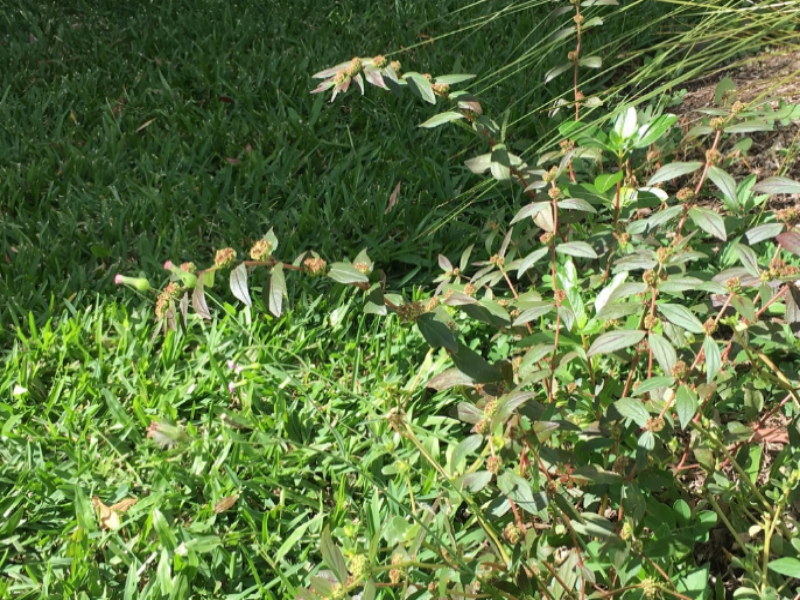
- Local Name: Garden Spurge or Asthma Plant
- Family: Euphorbiaceae
- Annual or Perennial: Annual
The prostrate or ascending Garden Spurge is a common weed in Zambia’s agricultural areas, gardens, roadsides, and disturbed areas.
It is easily identified by its round, hairy, reddish stems and oblong to lanceolate leaves with a purplish marking. Since it produces thousands of seeds in a growing season, it can spread quickly.
Hand-pulling and hoeing can help control the weeds in most landscapes. Mulching in garden beds can also achieve long-term results as the weed requires light to germinate.
A systemic herbicide like glyphosate can also control large Garden Spurge infestations.
22. Giant Sensitive Plant (Mimosa pigra)
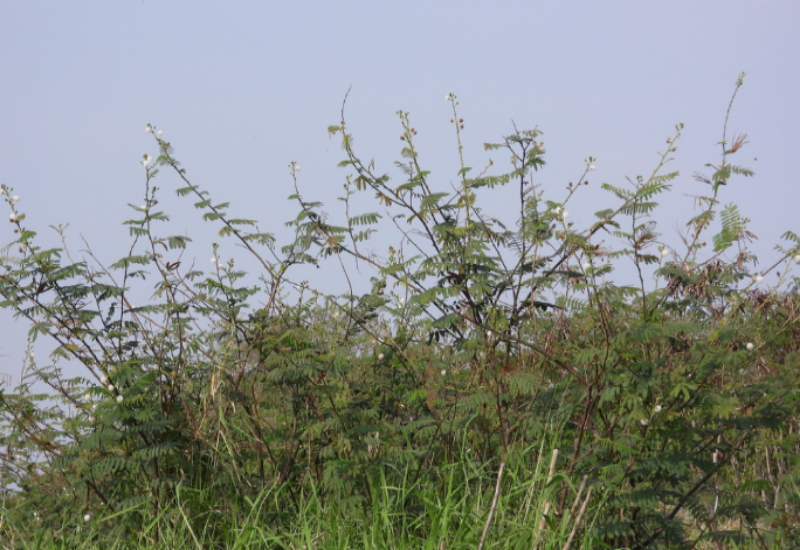
- Local Name: Giant Sensitive Plant
- Family: Fabaceae
- Annual or Perennial: Perennial
Mimosa pigra is a dense, thorny shrub with sensitive leaves and pink flowers. It invades rivers, swamps, wetlands, and floodplains, especially in Kafue Flats and Lukanga areas, forming impenetrable thickets.
By choking these waterways, the weed not only displaces native vegetation but also affects birds such as cranes and other wildlife.
The strategy commonly deployed by the local communities includes cutting, burning, and chemical control. Mimosa plants are slashed to ground level with the remaining fragments left to dry and later burned.
The regrowth is treated with approved herbicides through foliar sprays, cut stump applications, and soil application.
23. Flossflower (Ageratum houstonianum)
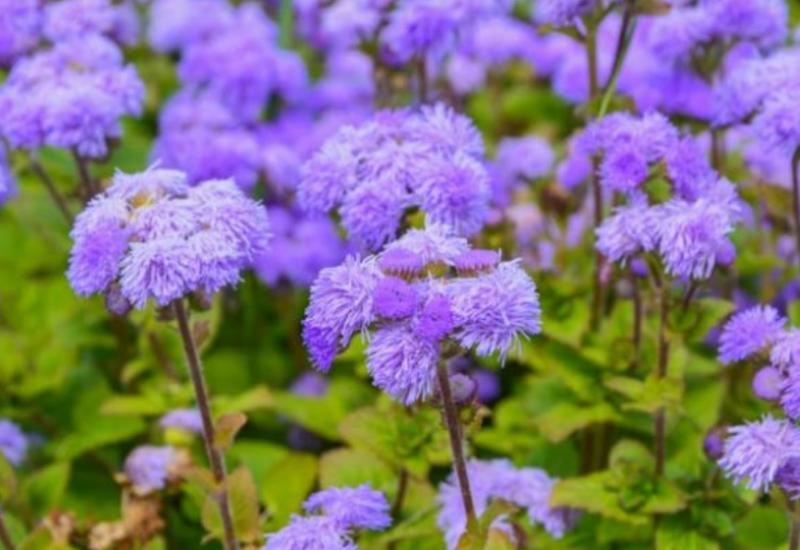
- Local Name: Flossflower, Goatweed, Ageratum, or Blue Billygoat Weed
- Family: Asteraceae
- Annual or Perennial: Annual or Short-lived Perennial
Goatweed is an annual or short-lived perennial herb that grows 10-100 cm tall. The weed can be identified by its softly-haired, round stems, obovate to egg-shaped leaves with bluntly toothed margins, and clusters of purplish, blue, or pink fragrant, long-living, tubular flowers.
Apart from wind dispersal, the seeds attach to animals, clothing, and contaminated produce, making it a highly invasive weed in pastures, crop fields, gardens, roadsides, waste areas, and disturbed sites.
Hand-pulling is viable for small infestations. The plant parts need to be bagged and disposed of correctly to avoid resprouting.
Herbicides such as glyphosate and metsulfuron-methyl used with a surfactant are indicated for effective Flossflower control.
24. Siam Weed (Chromolaena odorata)
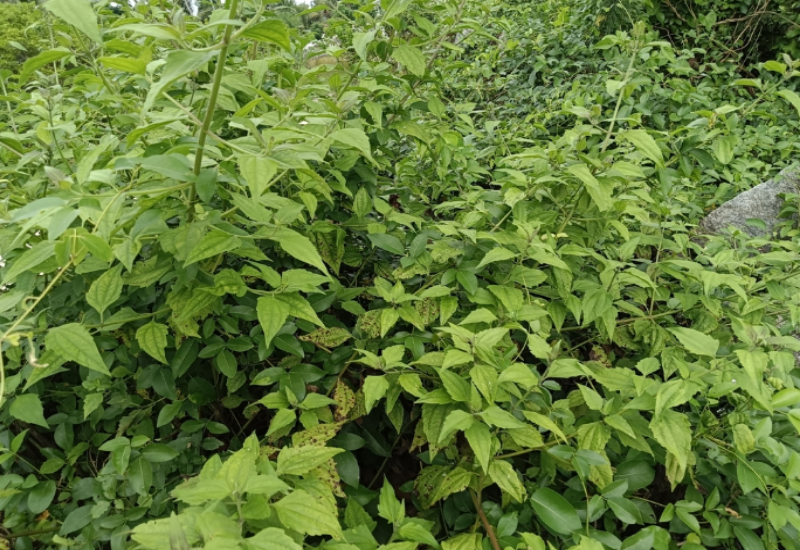
- Local Name: Siam Weed or Jack in the Bush
- Family: Asteraceae
- Annual or Perennial: Perennial
Siam Weed is a perennial subshrub that can grow up to 2.5-3m. It has a woody base, while the upper stems have soft, elliptic to triangular leaves, and panicles of white to pale pink flowers.
Chromolaena odorata is an invasive weed of field crops, protected forests, and pastures. Siam Weed is highly allelopathic to neighbouring vegetation, toxic to cattle, and can cause allergic reactions to humans.
Pulling out by hand is effective if all the fragments are removed and disposed of away from the site. Repeated slashing and application of glyphosate or metsulfuron on the young shoots can assist in removing the weed.
25. Jungle Rice (Echinochloa colona)
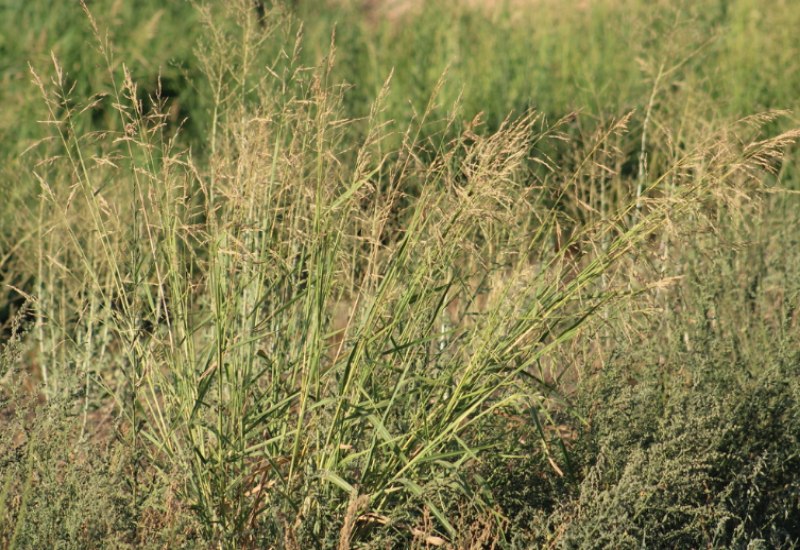
- Local Name: Jungle Rice
- Family: Poaceae
- Annual or Perennial: Annual
Jungle Rice is a fast-growing annual grass that commonly invades margins of maize, rice, and vegetable farms and other disturbed muddy or swampy places.
It is easily identified by its hairless stems and erect or ascending dull green culms, sometimes with purple banding.
Hand-pulling or hoeing before set seed will reduce the spread. Ensure that you dispose of it far from the fields and burn the weeds. Various herbicides like butachlor and glyphosate can be used to control Jungle Rice based on the areas of infestation.

Lead Editor for Insight Weeds.