Brachiaria spp. is a group of grasses native to East and Central Africa. The most common types include B. brizantha (Palisade Grass), Semanhyia, B. mutica (Para Grass), and B. ruziziensis (Congo Grass).
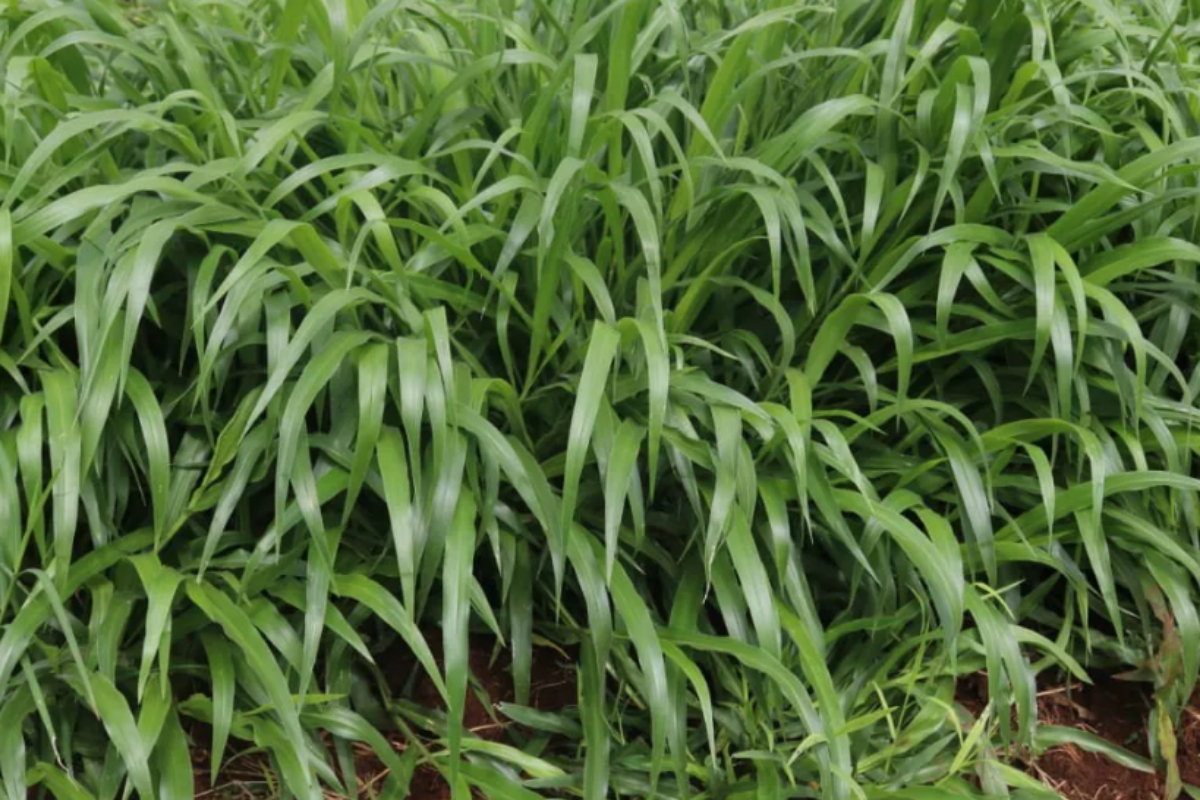
They are mostly perennial grasses with erect, decumbent, or slightly spreading culms, bright green leaves, and deep and extensive root systems.
Brachiaria spp. Classification
- Domain: Eukaryota
- Kingdom: Plantae
- Phylum: Tracheophyta
- Subphylum: Angiospermae
- Class: Monocotyledonae
- Order: Poales
- Family: Poaceae
- Genus: Brachiaria
- Common Species: Brachiaria brizantha, Brachiaria decumbens, Brachiaria ruziziensis, and Brachiaria mutica
Nativity and Distribution
Palisade Grass is native to East and Central Africa. They have also been introduced in other tropical regions around the world, such as:
- Australia
- Asia
- South America
- South Pacific
Physical Characteristics

- Leaves: Broad or narrow, bright green leaves
- Fruits: Spikelets arranged along racemes
- Stems: Erect, decumbent, or slightly spreading
- Flowers: A panicle consisting of racemes
- Roots: Fibrous root system
The Brachiaria are a common savannah grass with about a hundred recorded species across the tropics. The most common grasses in this species include B. mutica (Para Grass), B. brizantha (Signal or Palisade Grass), and B. ruziziensis (Congo Grass).
Leaves can be broad or narrow and smooth or hairy, depending on the species, but are typically bright green in color. The young leaves are usually softer but get coarse in maturity.
Culms are erect, decumbent, or spreading, and some species, like B. brizantha have short rhizomes for propagation.
The inflorescence is a panicle of racemes about 5-20 cm long. Spikelets are arranged in a panicle and vary in size. The flowering period is triggered by climatic cues in its growing range.
The caryopsis is small, lightweight, and typically ovoid, 2-5 mm long and 1-4 mm wide.
Reproduction, Dispersal, and Life Cycle
- Life Cycle: Perennial
- Seeds: Seed production varies per species
- Climate: Tropical and subtropical climates
- Dispersal: Wind and water
Most Brachiaria grasses behave as perennials, although some may occur as annuals in harsh conditions. Seed production is typically low, but they can remain dormant and viable for many years.
The few seeds that are produced may have hairy bristles or spiky glumes that enable them to move short distances by water, wind, and human activity.
However, some Bracharia commercial species like the Mulatto II and Cayman are bred for seed production in countries like Laos, Thailand, and Mexico.
Many of these grass species are valuable for forage, silage, and hay production and hence mainly propagated through vegetative cuttings.
Once planted, the grass steadily germinates and spreads over several seasons. However, flush growth can occur during the rainy seasons, with some of the grasses (which have tolerance for drought) retaining their green leaves in the dry seasons.
Semanhyia and other indigenous Brachiaria grasses grow best in warm tropics, requiring moderate to high rainfall. They are adapted to a range of soils, including low-nutrient and acidic soils.
Most species thrive in full sunlight, and only a few can tolerate partial shade. Shade, including under trees, decreases biomass, leaf to stem ratio, and slows their overall growth. Brachiaria grasses are sensitive to frost, but rootstocks and crowns can survive light frost in some species, like B. brizantha.
Uses

- Brachiaria spp. is primarily used for livestock-feeding, including grazing, cut and carry, hay, and silage. The most preferred grasses are B. brizantha, B. ruziziensis, and B. decumbens, for their high biomass and good nutritional value, especially in the growing seasons.
- They are an important species for commercial hybrid breeding to produce cultivars for high seed yield and overcoming limitations like drought, shade, and low soil fertility.
- The grasses are used for soil conservation, erosion control, and weed suppression because of their good ground cover.
- They are used in intercropping, border plants in pest management systems, and agroforestry.
- It supports grazing wildlife in savannah grasslands.
Impact on Farms and Environment
Brachiaria spp. can increase livestock productivity through quality fodder; in places where they are unwanted, they can become invasive, outcompeting local grasses. Additionally, due to its long-term seed dormancy, it may be difficult to eradicate the grass weed completely.
Due to their rapid growth, in areas where they are used in intercropping, they can reduce crop yields. B. Brizantha, for instance, has been reported to reduce the rice yields by 40-50%.
These grasses are also hosts to pests and diseases, putting crops at risk of diseases, which can lead to low yield or loss of the cover grass itself.
Control
- Cultural control: Grazing and controlled burning
- Mechanical control: Mowing and repeated cutting to exhaust reserves
- Chemical control: Herbicides like atrazine, fluaziflop-butyl, and glyphosate
Heavy grazing can reduce biomass, but it must be supervised to minimize erosion or lead to the emergence of other weeds in the open areas. Controlled burning will only remove the top growth and requires other control measures to kill the underground parts.
Repeated cutting and mowing can exhaust reserves, leading to reduced cover. This measure may take time and requires patience. Ensure to remove the young plants before they flower or set seed.
Herbicides indicated for Brachiaria spp. removal includes atrazine, fluaziflop-butyl, and glyphosate, depending on the area of infestation. For the best results, apply when the plants are young and actively growing.
If you’re unsure of what herbicide to use for your farm or landscape, we recommend consulting a local extension officer.

Lead Editor for Insight Weeds.