Cestrum nocturnum is an evergreen shrub that grows 4-5m tall. While it is not a true jasmine, its intense fragrance and night-blooming habit make it a popular ornamental plant in the tropical regions.

It can be identified by its arching branches, glossy, spear-shaped leaves, and tubular, greenish-white to cream flowers.
Night-Blooming Jasmine Classification
- Domain: Eukaryota
- Kingdom: Plantae
- Phylum: Tracheophyta
- Subphylum: Angiospermae
- Class: Dicotyledonae
- Order: Solanales
- Family: Solanaceae
- Genus: Cestrum
- Species: Cestrum nocturnum
- Common Names: Lady of the Night, Queen of the Night, Night-Scented Cestrum, White Cestrum, Night-Flowering Cestrum, Evening-Scented Jessamine, Night Jessamine, and Poisonberry
Nativity and Distribution
Night-Blooming Jasmine is native to Central America, including Belize, Mexico, Panama, Cuba, Costa Rica, and Ecuador.
Today, it has been naturalized in tropical and subtropical regions globally including, southern United States, South Africa, Australia, Oceania, Southern China, and in Pacific islands like Guam, Fiji, Tahiti, and Samoa.
Physical Characteristics

- Leaves: Glossy, oval to lanceolate, 6-20 x 2-7 cm
- Fruits: Globose, white berry, 8-12 mm wide
- Stems: Arching or twining with sparse hairs
- Flowers: Tubular, greenish, pale yellow, or white flowers, with five acute lobes
- Roots: Tap root system
C. nocturnum is an evergreen woody shrub in the potato family, Solanaceae, that grows up to 4-5m tall.
It can be identified by its arching or twinning branches, glossy, spear-shaped leaves, and tubular, greenish white to cream flowers.
Stems are arching or twining, with the younger twigs exhibiting sparse fine hairs.
The leaves are simple, oval to lanceolate, mostly described as spear-headed, 6-20 x 2-7 cm, with entire margins. They are smooth, glossy, and hairy on the midrib and the underside, borne on stalks 0.5-2 cm long.
The tubular flowers, 2.5 cm long, are greenish, pale yellow, or white, with five acute lobes (10-13 mm) that occur at the end of the branches. They open up at night and produce a strong, sweet scent that can become overwhelming indoors. Flowering occurs in spring and summer.
The seed is brown, 4-5 mm long and 2-2.5 mm wide.
Reproduction, Dispersal, and Life Cycle
- Life Cycle: Perennial
- Seeds: It’s a prolific seed producer
- Climate: Thrives best in tropical and subtropical climates
- Dispersal: Animals, water, and humans
Lady of the Night behaves as a perennial, thriving in tropical and subtropical climates. It mainly reproduces by seed but can also regrow from stem and root fragments.
Each plant can produce thousands of seeds per year. They are mainly dispersed by animals and birds, making seedling growth more common under trees. However, the seeds can also be dispersed by floodwaters and humans, especially as part of garden waste.
The seeds can remain dormant in the soil for many years.
Cestrum nocturnum thrives in moist, well-draining soils and prefers full sun to part shade. Therefore, it is a common weed of moist forests, open forests, forest margins, open areas, stream sides, shrublands, gardens, parks, and coastal areas.
Similar Plants
- Cestrum elegans
- Cestrum aurantiacum
- Cestrum parqui
Uses
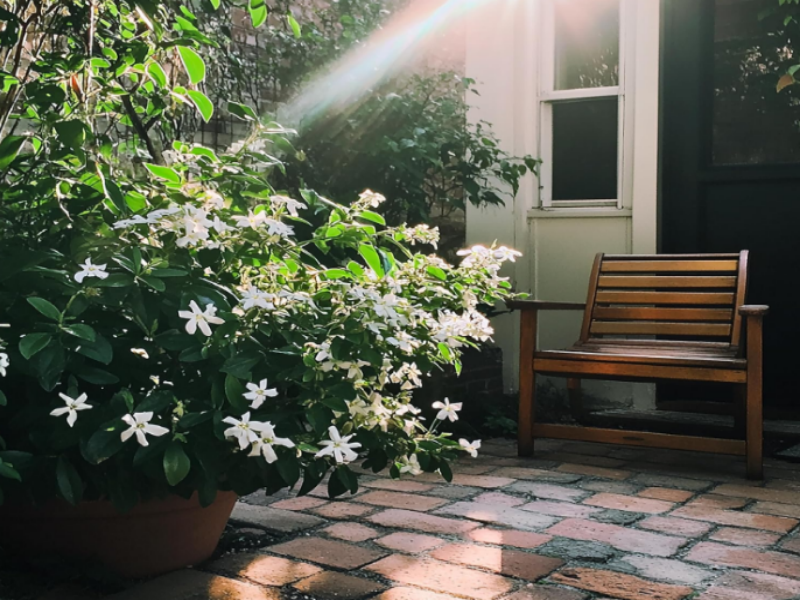
- It is grown as an indoor plant for its dense foliage and strong fragrance.
- It is used as a border plant, hedge, or screen.
Impact on Farms and Environment
Night-Blooming Jasmine may be a beloved houseplant, but outside a controlled environment, it is a serious weed in various forest ecosystems. It forms dense, impenetrable thickets that negatively impact the growth of native flora, causing drastic environmental changes.
In New Zealand, the plant has invaded forest understories, forest margins, and shrublands. In some Pacific Islands, Night-Blooming Jasmine has formed dense thickets, limiting native plant growth and movement.
Weed management in pastures and bush reserves can be costly, especially once it’s established.
Additionally, the plant is highly toxic to livestock and can cause illness or death. Parts of C. nocturnum, like the fruits, are also toxic to humans, causing symptoms such as fever and excess salivation.
People with asthma or respiratory problems also suffer headaches, difficulty breathing, nausea, and other irritations when exposed to the plant’s strong scent.
Control
- Mechanical control: Hand-pulling young plants and rapid land reclamation
- Chemical control: Applying a herbicide like glyphosate
Cestrum nocturnum control can be achieved through mechanical and chemical strategies.
Hand-pulling seedlings and young plants is the best strategy to prevent further growth and spread.
More mature plants require deep cutting as they are woody and proper disposal to prevent regrowth. Once the site is cleared, the land should be replanted immediately.
Cutting the foliage and spot-treating the remaining stem parts is another alternative that can offer effective control.

Lead Editor for Insight Weeds.