The invasive Eurasian Watermilfoil (EWM), or Myriophyllum spicatum, has continued to ravage Christina Lake waters. A recent report from Keefer Ecological Services has now highlighted the need for additional measures to achieve faster, more effective control.
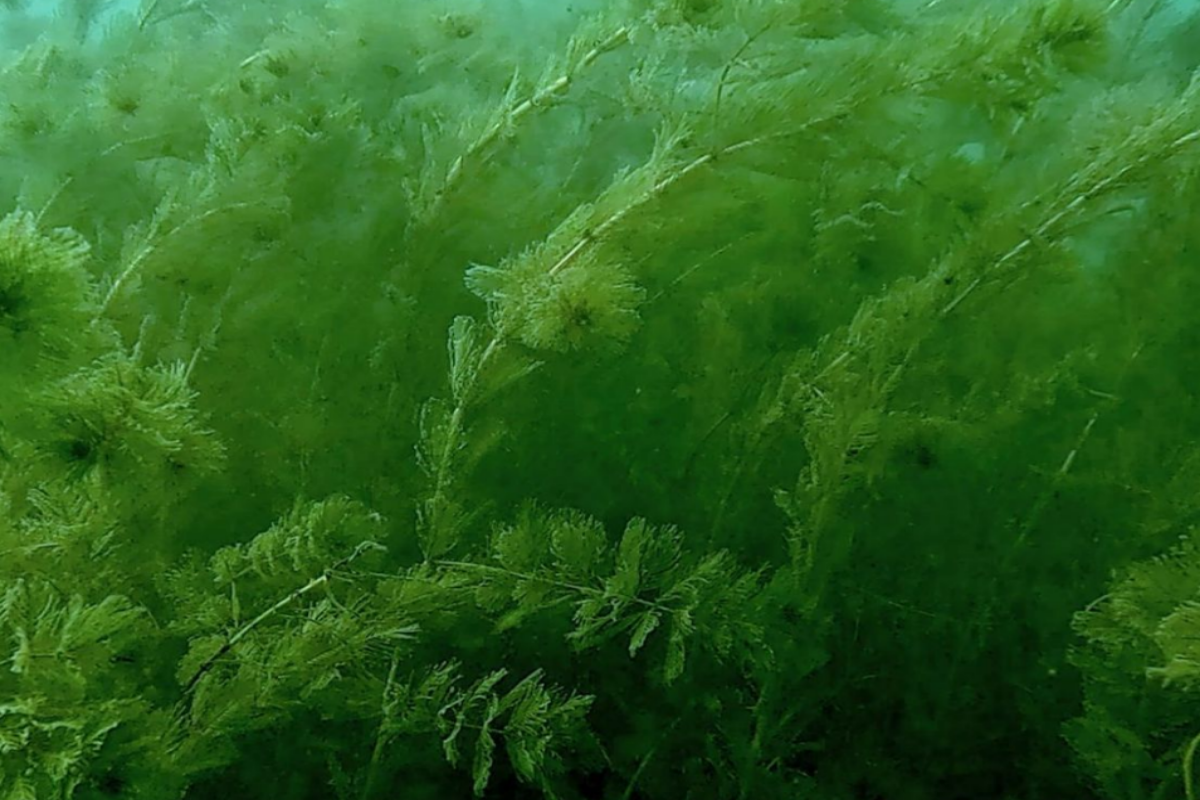
The current eradication methods, hand-pulling and benthic mats, are effective in controlling localized populations but have not reduced the overall weed population.
For large and well-established weed populations as found in Cristina Lake, the two approaches may not yield measurable results.
The Eurasian Watermilfoil Devastation
The weed population has steadily reduced food and habitat for numerous amphibians, fish, and other invertebrates.
Additionally, the dead plant matter causes oxygen depletion in the lake as microorganisms take up more of the vital gas to break down the material, further straining or killing aquatic species.
Not to mention interfering with boating, swimming, and fishing.
According to the report, “Without continued intervention, it is probable that EWM will continue to expand until it reaches its ecological carrying capacity within Christina Lake, replacing diverse plant communities with dense mats.”
The Community Weighs in on the Proposed Weed Strategy
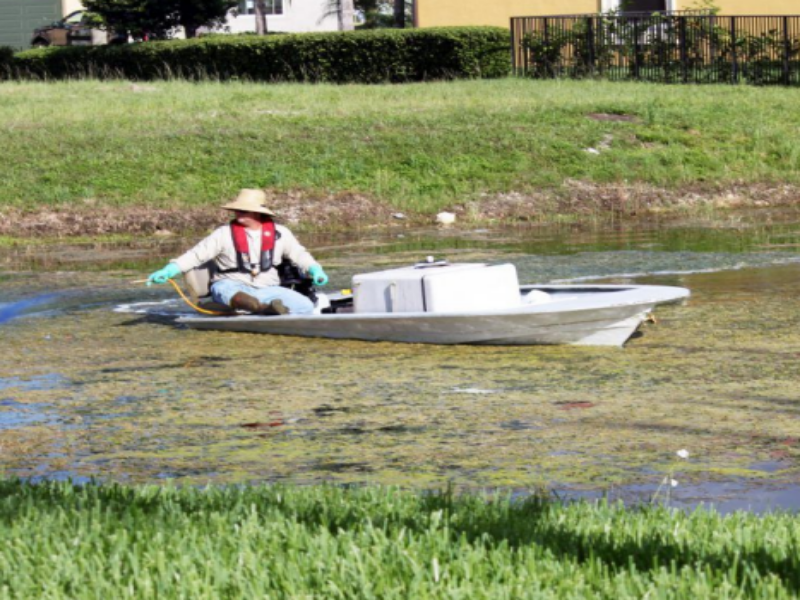
Keefer Ecological Services (KES), in collaboration with the Regional District of Kootenay Boundary (RDKB), are considering adding the use of a selective aquatic herbicide, ProcellaCOR FX, to manage the weed.
Residents, First Nations, and the public gave their views on the proposal through public engagement sessions and on an online survey.
The feedback collected, backed by the best available scientific knowledge will offer insight into the best planning approach while upholding community values and priorities.
If there is enough support for the use of ProcellaCOR FX, the RKDB will conduct further research on the herbicide efficacy based on Christina Lake’s specific environmental conditions.
Should the majority of the community disapprove of the strategy, the RKDB will drop the proposal and continue with the current non-chemical methods already in use.
However, as per the report, they will continue exploring other control techniques as new research and technologies become available.

Lead Editor for Insight Weeds.