Geranium albanum is a clumping perennial that grows 30-50 cm tall or sprawling about 50 cm wide. It reproduces by seed and is a common weed of various disturbed areas.
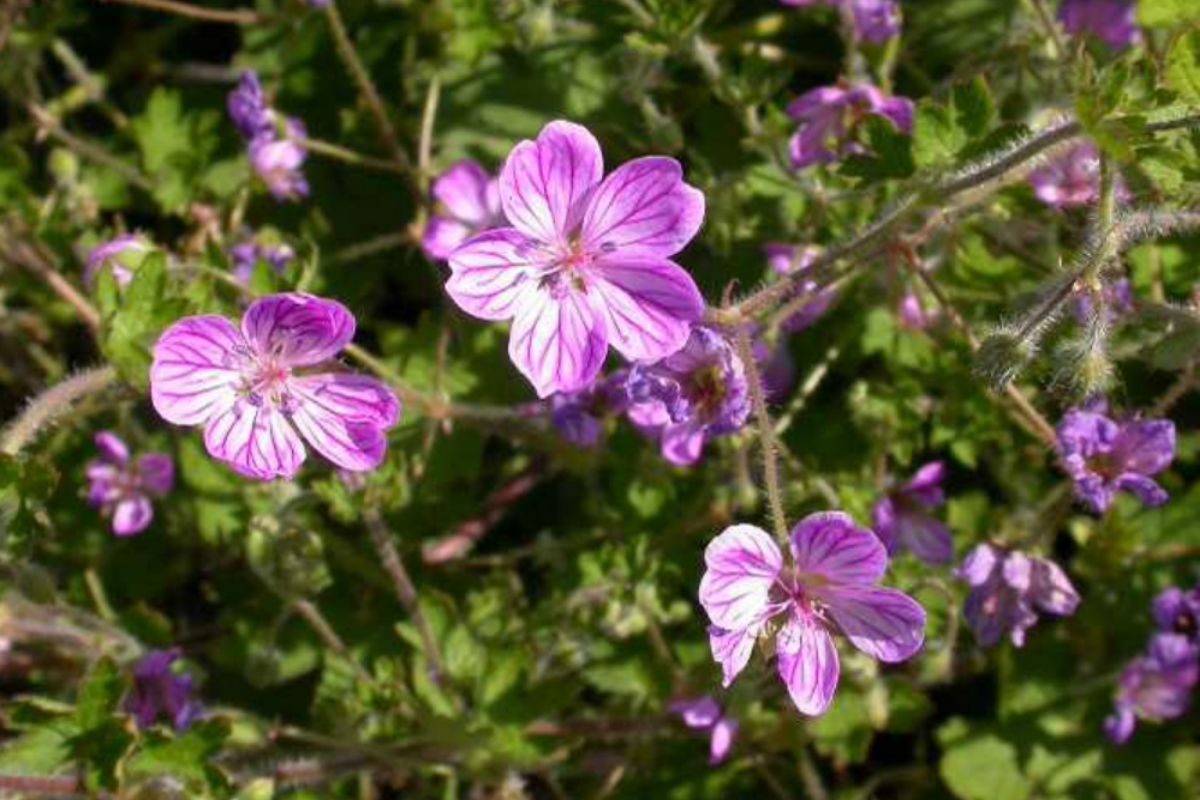
You can easily identify it by its slender, trailing stems, downy, deeply dissected leaves, and pale pink to magenta flowers.
Albanian Cranesbill Classification
- Domain: Eukaryota
- Kingdom: Plantae
- Phylum: Tracheophyta
- Subphylum: Angiospermae
- Class: Dicotyledonae
- Order: Geraniales
- Family: Geraniaceae
- Genus: Geranium
- Species: Geranium Albanum
- Common Names: Crested Cranesbill or Albanian Cranesbill
Nativity and Distribution
Crested Cranesbill is native to the Caucasus and Northern Iran. Today, it is grown as an ornamental and can be found in other parts of the world.
Physical Characteristics

- Leaves: Deeply dissected, heart-shaped, bright-green leaves
- Fruits: Cranesbill beak-shaped capsule
- Stems: Slender stems emerging from the base
- Flowers: Five-petaled, pale pink to magenta flowers
- Roots: Fibrous root system
Geranium albanum is a flowering plant that grows 30-50 cm tall or sprawls 50 cm wide. It is easily identifiable by its slender, trailing stems, downy, deeply dissected leaves, and pale pink to magenta flowers.
The leaves are deeply dissected, bright green, and somewhat heart-shaped. Stems are slender, emerging from a basal clump, and either display a semi-upright or trailing growth pattern.
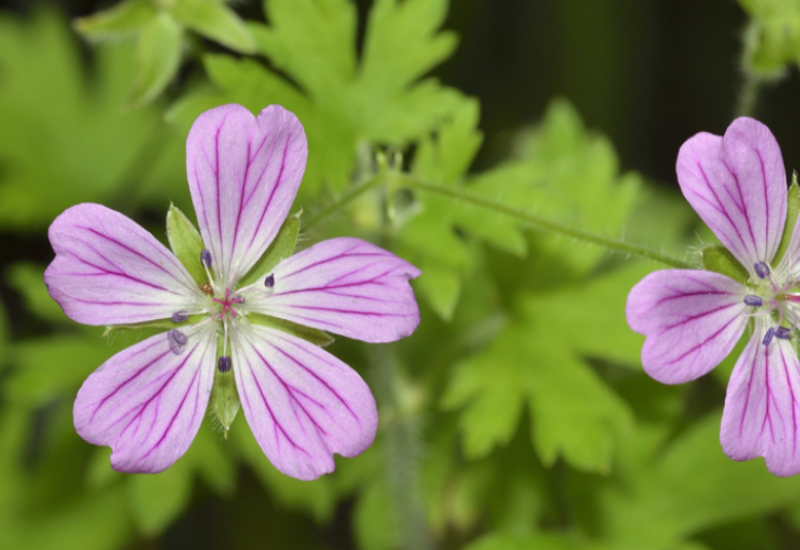
Albanian Cranesbill produces purple-veined, rounded, five-petaled flowers that emerge pale pink in spring and slowly change to magenta by summer. Flowering occurs in spring to mid-summer.
The seed is light brown, ovoid, with a shriveled outer surface.
Reproduction, Dispersal, and Life Cycle
- Life Cycle: Perennial
- Seeds: A good seed producer
- Climate: Temperate climate
- Dispersal: Explosive mechanism
Crested Cranesbill behaves as a perennial, thriving in temperate climates. Like many of the Geranium species, it propagates by seed.
Once the fruit is mature, it expels the seeds through an explosion mechanism. Most seeds typically fall meters near the parent plant, while others are dispersed by animals. The seeds near the soil surface can remain viable for many years.
This Cranesbill prefers moist but well-drained soils, including clay, loam, and sand soil, and thrives in full sun to part shade. In its native habitats, it remains evergreen, and in non-native areas, it can die back in colder conditions.
Similar Plants
- Geranium sanguineum
- Geranium oxonianum
- Geranium robertianum
- Geranium molle
Uses
- It is grown as a pollinator plant to attract butterflies, bees, and other beneficial insects.
- It’s a popular ornamental placed in rock gardens, borders, or as groundcover for its sprawling habit and beautiful blooms.
- Parts of the plant were used as traditional medicine for treating infections and wound healing.
- It is used to formulate infused oil indicated for rashes and skin irritations.
Impact on Farms and Environment
G. albanum is a medium to low-intensity weed in farmlands and is generally non-invasive. However, since it’s a good seed producer and has a sprawling habit, it can encroach and compete for resources with desirable plants.
It is also a good support plant for pollinator populations and does not pose serious pest or disease problems.
Control
- Cultural control: Edging groundcover
- Mechanical control: Hand-pulling and cutting before flowering
- Chemical control: Apply herbicides like dicamba, 2,4-D, or glyphosate
If growing Crested Cranesbill as a groundcover, edging the plants with barriers can prevent escape to unwanted areas.
Hand-pulling and cutting of the seedlings before the flower can provide effective control for small weed infestations around the gardens.
For bigger areas, postemergence herbicides like dicamba, 2,4-D, or glyphosate can eradicate the plants.

Lead Editor for Insight Weeds.