No doubt weeds are a nuisance, especially when they invade our prized landscapes or crop fields. However, each of the plants has features that allow them to thrive in diverse environments and also to add to their beauty. One of these unique adaptations is the lobed leaf structure.

Lobed leaves are divided into distinct projections that not only look visually distinct but also play various roles for different plants.
In this post, we’ll look at a comprehensive list of weeds with lobed leaves and highlight how these leaf structures aid in their survival.
1. Dandelion (Taraxacum officinale)
- Local Name: Dandelion or Common Dandelion
- Family: Asteraceae
- Annual or Perennial: Perennial
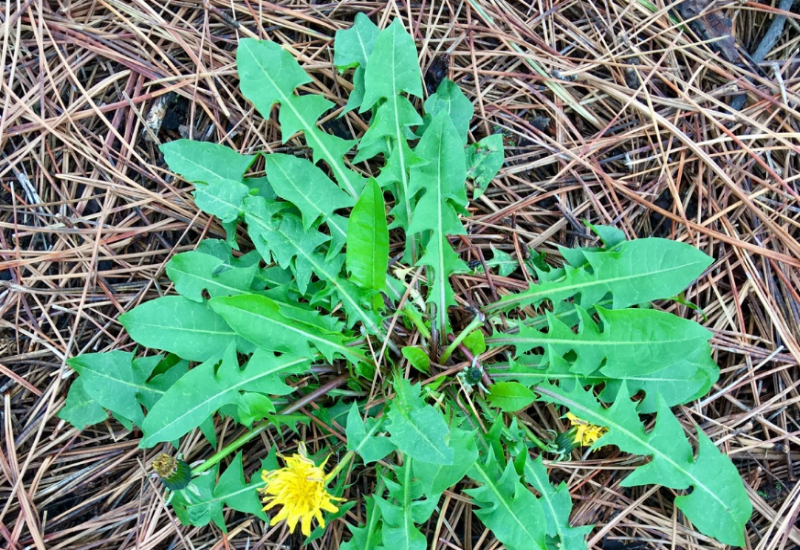
One of the distinct features of this common lawn weed are its deeply-lobed leaves that form a basal rosette.
The lobes allow for efficient water channeling to the roots and also help the plant to enjoy good sun exposure by spreading close to the ground.
Pull out or use a handy tool to remove dandelions from the roots. Herbicides like dicamba, 2,4-D, triclopyr, and glyphosate can help control larger infestations.
2. Wild Mustard (Sinapis arvensis)
- Local Name: Wild Mustard
- Family: Brassicaceae
- Annual or Perennial: Annual
Wild Mustard is a summer annual found in the mustard family. It is a common and aggressive weed in the grain and forage crop fields as well as disturbed sites with high nitrogen levels.
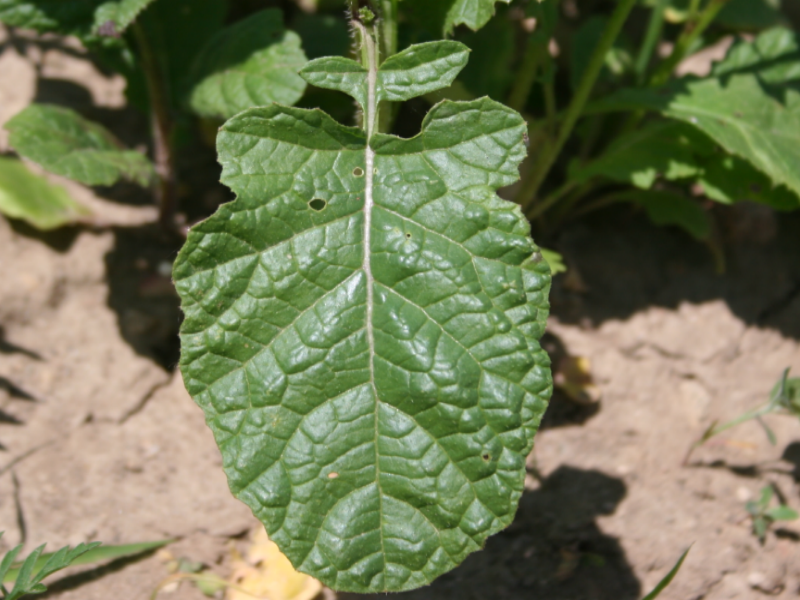
It produces variable leaf shapes, but the lower leaves of a mature plant are broadly lobed with toothed edges. Apart from providing nutrition, the lobed leaves help to achieve fast growth and to crowd out of crops.
Repeated manual removal and cultivation at the seedling stage will exhaust the seedbank. Mowing can also help reduce seed production and spread.
Glyphosate, triclopyr, 2,4-D, triclopyr + 2,4-D, and dicamba can be applied at different stages to eradicate the weed.
3. Bull Thistle (Cirsium vulgare)
- Local Name: Bull Thistle, Common Thistle, or Bur Thistle
- Family: Asteraceae
- Annual or Perennial: Biennial
Bull thistle, like most of its cousins, is considered one of the most noxious weeds across the globe. Part of what makes the thistle an efficient spreader is its leaves.
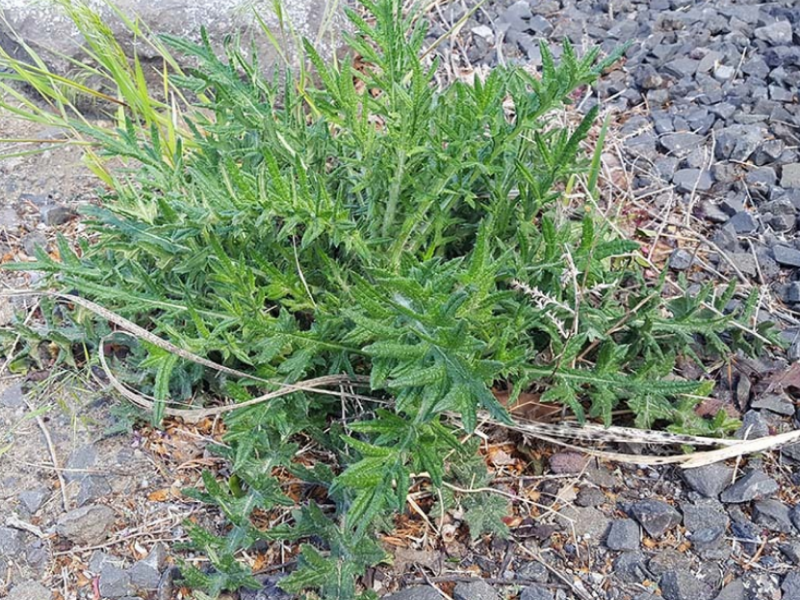
The weed begins by forming deeply lobed and spiny leaves that create a basal rosette about 65 cm wide.
While they mainly ensure the growth of the weed in the next season, the leaves can also effectively deter herbivores and allow easy light and air penetration in dense stands.
Canada Thistle has a similar leaf structure to Bull Thistle, but its basal rosettes vary between deeply divided and shallowly lobed leaf designs.
Grazing, hand-pulling, cutting, repeated mowing, and tillage done before flowering can help control small Bull Thistle populations. For larger plants, apply herbicides like dicamba, 2,4-D, glyphosate, picloram, or MCPA on the basal rosettes.
4. Shepherd’s Purse (Capsella bursa-pastoris)
- Local Name: Shepherd’s Pouch, Lady’s Purse, or Shepherd’s Bag
- Family: Brassicaceae
- Annual or Perennial: Annual
Shepherd’s Purse is a winter annual Eurasian native commonly found in crop fields and any disturbed site.
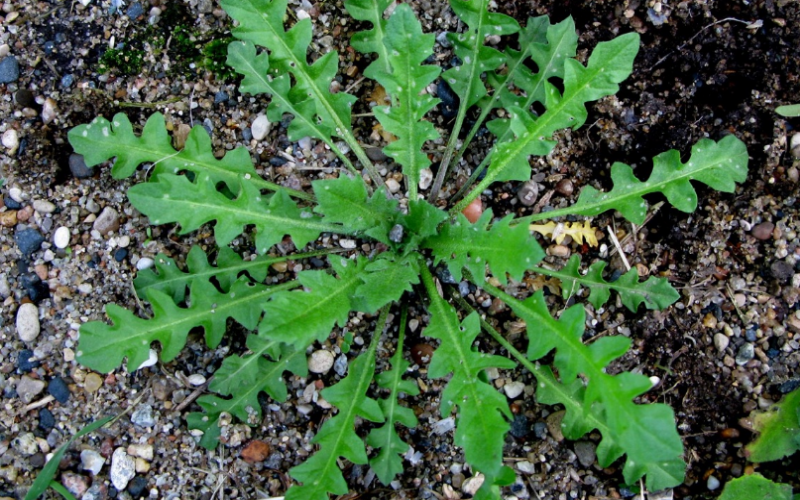
Its leaves vary in shape, but its basal rosette leaves can range from smooth to deeply lobed. The leaves assist the weed to sprout in compacted soils and prevent being shaded out by other plants.
For fast and effective control, herbicides such as flumioxazin, glyphosate, diquat-bromide, and bentazon can be applied, based on the infestation area.
5. Common Ragweed (Ambrosia artemisiifolia)

- Local Name: Ragweed, Common Ragweed, or Annual Ragweed
- Family: Asteraceae
- Annual or Perennial: Annual
Ragweed is an annual weed native to the Americas. It is a rapid colonizer of open areas and disturbed sites, but it is mostly known for its allergenic pollen that causes hay fever.
This summer weed can be easily identified by its finely divided, deeply lobed leaves with a fern-like appearance. The leaf adaptation allows the plant to withstand wind, thereby growing to a maximum height for effective pollen dispersal.
The best removal methods include hand weeding, cutting, and mowing at a height 2 cm from the soil. You can also consider postemergence herbicides like dicamba, 2,4-D, imazapic, and metsulfuron-methyl, depending on the crop or area infested.
6. Poison Hemlock (Conium maculatum)

- Local Name: Poison Hemlock
- Family: Apiaceae
- Annual or Perennial: Biennial
Poison Hemlock is a tall and invasive biennial that can be found in stream banks, roadsides, riparian areas, and edges of cultivated fields.
Apart from the basal rosette leaves in the first year, it also produces true leaves that are smooth, pale green with numerous deeply lobed leaflets, arranged alternately along the stem.
The leaves serve the basic core functions, which include efficient photosynthesis, flexibility, and herbivore deterrence.
Herbicides like glyphosate, 2,4-D, and triclopyr provide effective control if applied in the first-year basal rosette, as the more it grows, the more expensive herbicide control it may require.
7. Common Cocklebur (Xanthium strumarium)
- Local Name: Cocklebur, Common Cocklebur, or Rough Cocklebur
- Family: Asteraceae
- Annual or Perennial: Annual
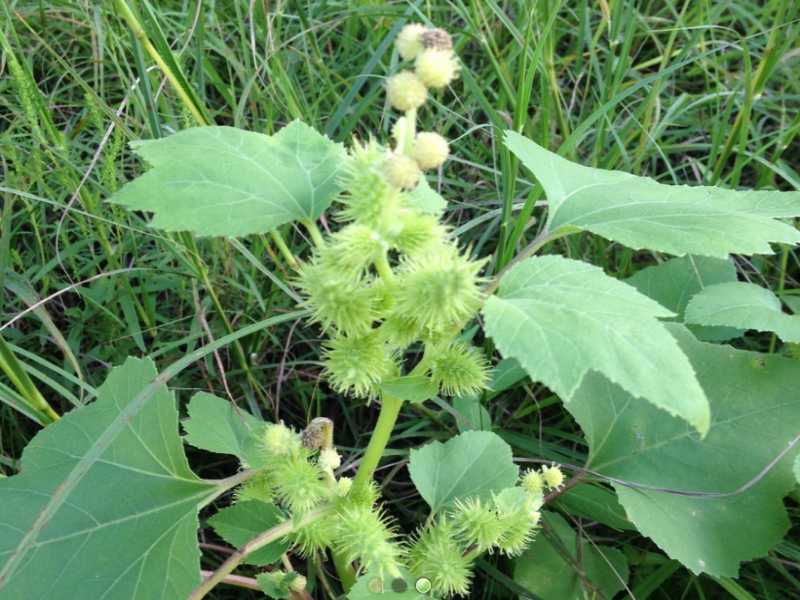
Common Cocklebur is a summer annual known for invading pastures, crop fields (especially corn, soybean, and cotton), orchards, roadsides, and riparian areas.
Besides the spiny burrs, the mature plant also produces leaves that are triangular and lobed, with toothed margins, and are alternately arranged along the stem.
Remove the weeds by hand or with a digging tool if you’re dealing with a small infestation. You’ll need strong gloves as you handle the weed. Alternatively, use broadleaf herbicides like dicamba, 2,4-D, and triclopyr.
8. Bristly Mallow (Modiola caroliniana)

- Local Name: Carolina Bristlemallow, Redflower Mallow, or Bristly-fruited Mallow
- Family: Malvaceae
- Annual or Perennial: Perennial
Bristly Mallow is a broadleaf perennial weed native to South America. It commonly invades gardens and lawns, alfalfa fields, and pond shores.
Mature plants produce leaves in variable shapes, from ovate to palm-shaped with 6-7 deep lobes and or deeply divided with lobes.
The leaves not only provide food and shelter for insects, they also contain a high level of mucilage which allows the plant to absorb and retain moisture even in drought.
If the weed invades your lawn or garden, hand weed it before it produces seed in early summer. Ensure that you remove the deep taproot system to avoid regrowth. Postemergent herbicides containing combinations of dicamba and MCPA or MCPA and bromoxynil can also provide effective control against the mallow.
9.Hairy Bittercress (Cardamine hirsuta)

- Local Name: Hairy Bittercress, Hoary Bittercress, Bittercress, Land Cress, or Springcress
- Family: Brassicaceae
- Annual or Perennial: Annual
Hairy Bittercress is a winter annual that will be one of the first weeds to pop up in your lawn where the turf is thin or bare in late summer.
The small, low-growing weed bears 2-4 pairs of leaflets with lobed margins that merge to form a basal rosette.
The best removal method is by hand or digging before it sets seed. Landscapers have found it easy to pull or dig as long as the ground is not frozen. Adequate mulching in garden beds, as well as maintaining a dense and healthy lawn, can also discourage growth.
For larger infestations, consider herbicides such as glyphosate, pelargonic acid, diquat, and glufosinate, depending on the affected area.
10. Cutleaf Evening Primrose (Oenothera laciniata)
- Local Name: Cutleaf Evening Primrose
- Family: Onagraceae
- Annual or Perennial: Biannual
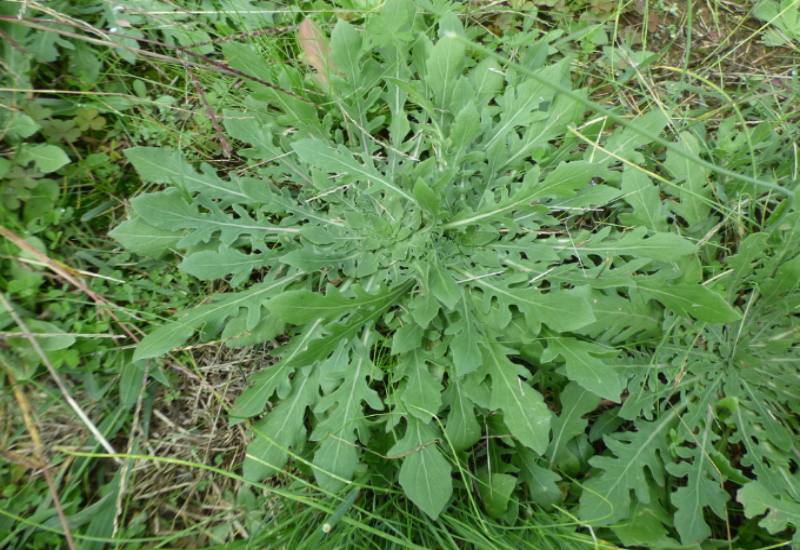
Cutleaf Evening Primrose is an upright or prostrate weed that grows in thin lawns, fencerows, open fields, and waste areas.
The weed grows toothed and lobed leaves for increased photosynthesis surface area and to help it withstand drought conditions.
You can pull out small weeds by hand, especially when the ground is moist, as it can develop a thick taproot. Herbicides containing dicamba, glyphosate, 2,4-D, and paraquat are indicated for the best control results.

Lead Editor for Insight Weeds.