Low creeping weeds can be a nuisance if you’re trying to keep a lush, healthy lawn. These stealthy invaders often grow low to the ground, escaping notice until they’ve formed dense mats across the turf. If left unchecked, they can turn your hard work into a thinned-out and unsightly lawn.

Fortunately, with quick identification and the right removal methods, you can get ahead of the invaders and reclaim your lawn.
In this post, you’ll find a list of common low creeping lawn and the most effective strategies to remove them.
1. White Clover (Trifolium repens)
- Local Name: White Clover
- Family: Fabaceae
- Annual or Perennial: Perennial

White clover is a low growing herbaceous perennial plant that is native to Europe and Asia. You would first notice its egg-shaped, trifoliate leaves with light or dark markings before the white to pink flowers appear.
The growth of white clover in your lawn can indicate a poor nitrogen-nutrient profile. To eliminate the weed, improve lawn health through proper mowing (above 3 inches and apply nitrogen-rich fertilizer.
You can pull out the young plants when the ground is moist or spot treat with a selective postemergent broadleaf herbicide like dicamba, 2,4-D, MCPP, and triclopyr.
2. Spotted Spurge (Euphorbia maculata)

- Local Name: Spotted Spurge or Prostrate Spurge
- Family: Euphorbiaceae
- Annual or Perennial: Annual
Spotted spurge is an annual low growing weed native to North America. The common lawn weed spreads about 45-60 cm along the ground.
You can identify the weed by its slender, reddish stems and small, dark green, round to oblong leaves with reddish-purple spots in the middle. Spotted Spurge typically grows in thin lawns.
The best way to remove small patches is through pulling or hoeing before they produce seed. Alternatively, spot treatments of selective herbicides like MCPP, 2,4-D, and dicamba can help eliminate less mature plants.
The tip here is to deal with the weed early to avoid resorting to non-selective ingredients like glyphosate that will harm your grass.
Ensure that you maintain a healthy turf through proper watering, mowing, and fertilization after removing the weeds to prevent regrowth.
3. Crabgrass (Digitaria ischaemum and Digitaria sanguinalis)
- Local Names: Smooth Crabgrass and Large Crabgrass
- Family: Poaceae
- Annual or Perennial: Annual
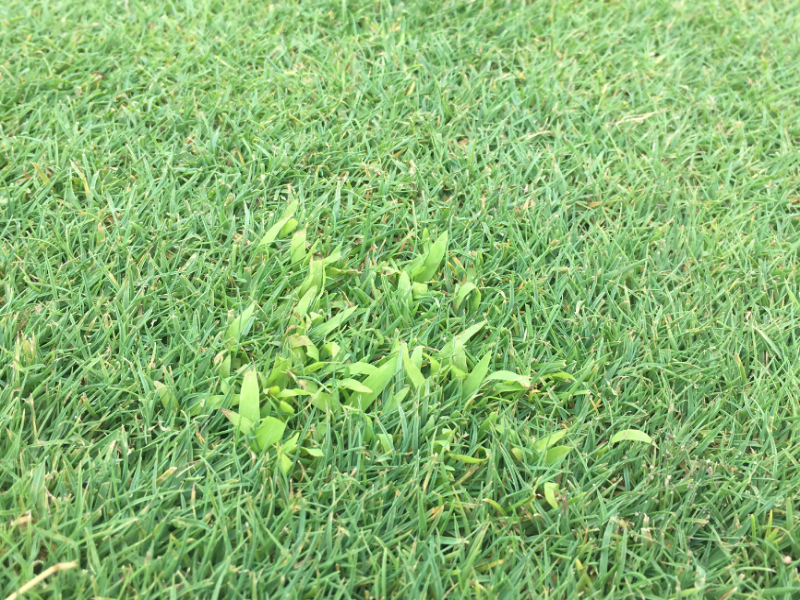
Both crabgrass species are pesky annual weeds that can sneak into your lawn. What makes them tricky to identify is that they grow slowly at first and easily blend in with the rest of the grass during spring.
It’s probably in summer that you’ll notice a different light-green shade of grass that stands out against your darker-green turf. Fortunately, there are a few effective removal methods you can deploy.
Hand pulling or hand-held tools are viable options for a few stands of grass. Ensure that you reseed the gaps to prevent the growth of other weeds.
Postemergence herbicides containing quinclorac, mestorione, and fenoxaprop provide effective control against both grasses. Ensure that you apply the product appropriate for the growth stage for the best results.
If you’re concerned that crabgrass may appear the next spring, apply a crabgrass preventer or Tenacity for newly seeded turf or dithiopyr, prodiamine, and dithiopyr for established turf.
4. Creeping Charlie (Hederacea glechoma)
- Local Name: Creeping Charlie, Creeping Jenny, Gill Over the Ground, or Ground Ivy
- Family: Lamiaceae
- Annual or Perennial: Perennial
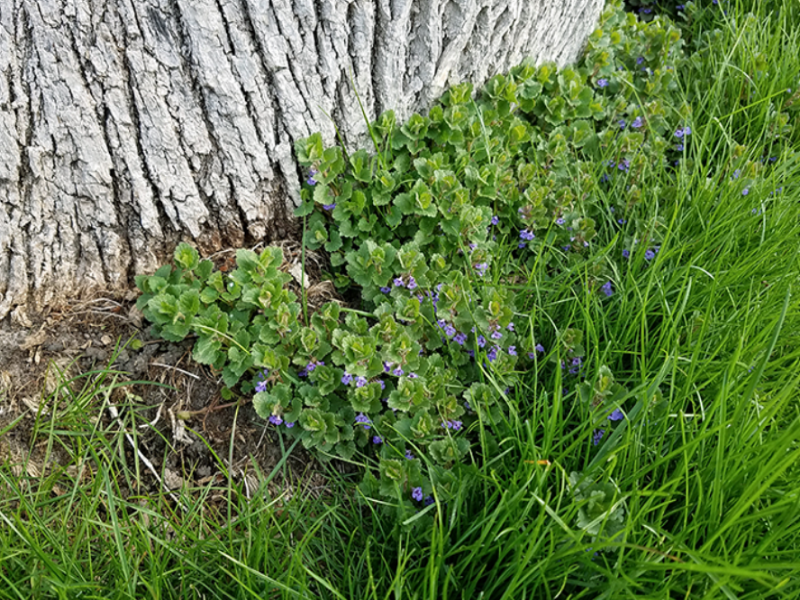
Creeping Charlie is a perennial weed efficient at forming dense mats in lawns. The fast-spreading weed is easily identifiable by its round to kidney-shaped leaves that produce a minty odor when crushed and purple-blue flowers.
You’ll notice this weed in shady, moist, or thin areas of the lawn. Hand-pulling or hoeing is only viable for extremely small infestations. Make sure that you remove the entire root system and runners to avoid regrowth.
However, due to its seed, rhizome, and stolon spreading habit, it’s a very difficult weed to control without herbicides. Use products containing 2,4-D, dicamba, triclopyr, or sulfentrazone to get rid of Creeping Jenny in lawns. Keep in mind that even herbicide applications can take years to completely eradicate the weed.
If the weed is progressively overtaking your lawn grass despite your best efforts, it’s best to kill all the vegetation and reseed your lawn.
5. Chickweed (Stellaria media)

- Local Name: Chickweed or Common Chickweed
- Family: Caryophyllaceae
- Annual or Perennial: Annual
Common Chickweed is a winter annual broadleaf that you’ll probably find in shady and moist areas of your lawn. But don’t let the small, delicate plant with tear-drop-shaped leaves and star-like flowers fool you. It can produce an average of 25,000 seeds per plant with a viability of over 10 years.
It is also a host to plant viruses and pest insects. This can only mean bad news for your turf, especially if it’s nitrogen-rich, as it prefers highly fertile and neutral soils.
If you’re dealing with a small infestation, hand-pulling before seed set and when the soil is moist can help eliminate the weed. For bigger infestations, consider herbicides like dicamba and triclopyr. Ensure that you check the label for indications on specific turfgrasses.
Once removed, maintain a healthy lawn and proper drainage to discourage seed germination.
6. Purslane (Portulaca oleracea)
- Local Name: Purslane or Common Purslane
- Family: Portulaceae
- Annual or Perennial: Annual
You probably appreciate Common Purslane’s diverse culinary benefits but not when it’s growing on your front lawn. The low growing weed prefers invading newly seeded turf, low-maintenance lawns, or areas in the lawn under full sun.
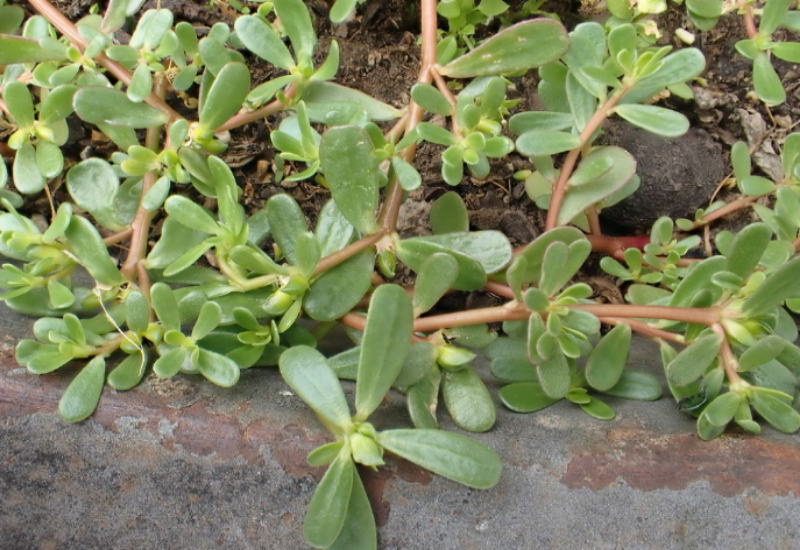
For easy identification, look for small, flat, rubbery leaves and reddish stems that branch out of a central root. If left unchecked, Purslane can form dense mats on your lawn and quickly produce thousands of seeds that remain viable up to 40 years.
However, since the spreading branches come off a single root, it is easy to pull by hand. Ensure you remove the entire root system and dispose of it correctly to avoid rerooting.
Postemergence herbicides you can consider include dicamba, 2,4-D, MCPP, and MSMA. Improving your lawn practices to achieve a healthy and competitive turf can get rid of this weed problem in the following seasons.
7. Carpetweed (Mollugo verticillata)
- Local Name: Green Carpetweed, Whorled Chickweed, Indian Carpetweed, or Devil’s Grip
- Family: Molluginaceae
- Annual or Perennial: Annual
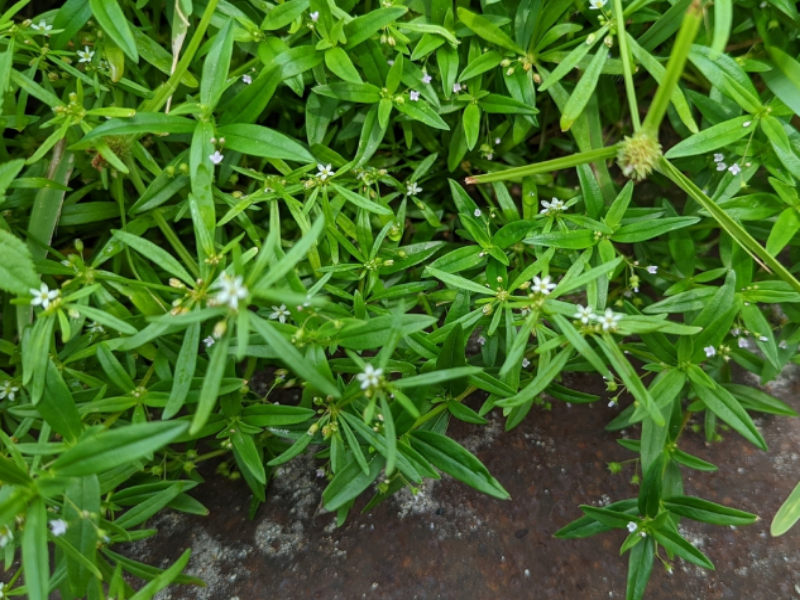
As its name suggests, this summer annual weed grows close to the ground, hardly exceeding 5 inches in height. Carpetweed thrives in disturbed areas and will therefore commonly invade newly planted turf.
From a central root, it grows a circular mat of dull green leaves with variable shapes that spread in all directions, quickly forming dense mats.
Hand pulling or digging using a garden tool is a viable option in the initial stage of the infestation.
For larger infestations, apply herbicides containing one or more of the active ingredients like 2,4-D, dicamba, MCPP, or triclopyr on actively growing foliage for effective control.
8. Creeping Buttercup (Ranunculus repens)
- Local Name: Creeping Buttercup, Creeping Crowfoot, or Sitfast
- Family: Ranunculaceae
- Annual or Perennial: Perennial
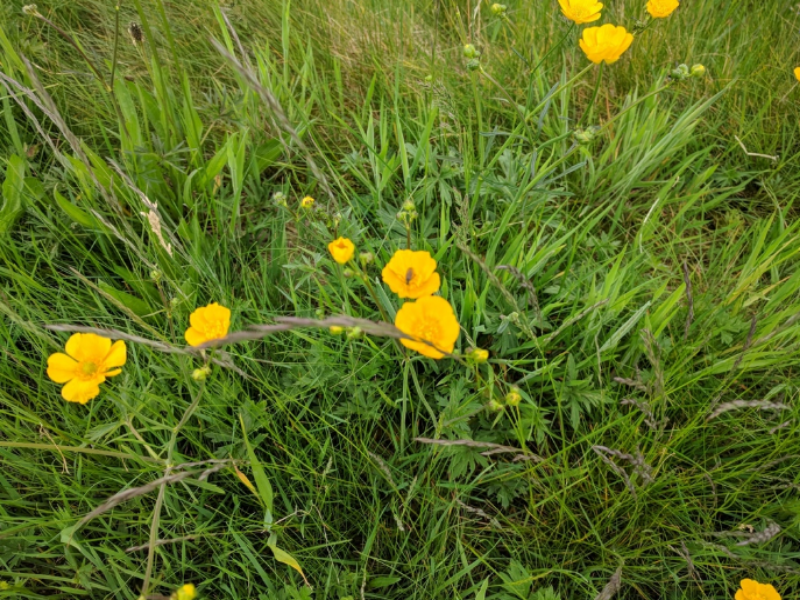
Picking Creeping Buttercup games are no longer fun when it’s creeping on your prized lawn. The stoloniferous weed is commonly found in thin turf, forming large patches through new plants that root at the nodes.
To correctly identify the low growing weed, look for three lobed leaves or leaflets variable in shape, with deep sinuses and serrated margins.
Improving lawn density through regular mowing, infrequent irrigation, and improved drainage can drastically reduce infestations.
Postmergence herbicides like triclopyr, dicamba, MCPA, mesotrione, 2,4-D, and fluroxypyr can assist in removing the pesky weeds.
9. Virginia Buttonweed (Diodia virginiana)
- Local Name: Virginia Buttonweed or Buttonweed
- Family: Rubiaceae
- Annual or Perennial: Perennial
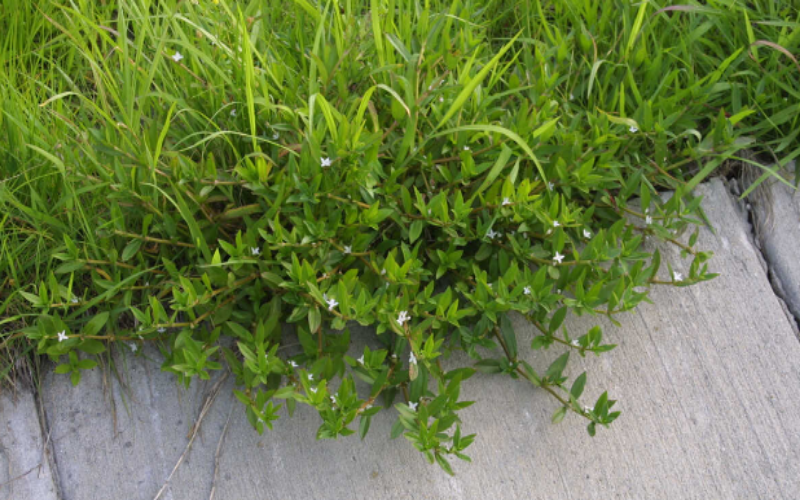
Buttonweed is one of the most problematic low growing lawn weeds. The annual broadleaf produces deep roots and grows prostrate and spreading branches.
It is easily identifiable by its stiff, slightly thickened leaves, typically with a distinct mottled yellow appearance and occasionally hairy, longitudinally-ridged stems.
Postemergence herbicides containing 2,4-D, dicamba, MCPP, and carfentrazone provide the best means of removing the persistent weed from your lawn for good.
10. Yellow Woodsorrel (Oxalis stricta)

- Local Name: Yellow Oxalis, Shamrock, Sheep’s Clover, or Sour Trefoil
- Family: Oxalidaceae
- Annual or Perennial: Annual or Short-lived Perennial
Unlike many early weed springers, the Yellow Woodsorrel prefers to fill up the gaps left by the weeds eliminated in the yard. The weed typically grows about 6 inches in height and you can identify it by its palmately compound, heart-shaped leaves.
What makes Shamrock a tricky weed is that it can occur in poorly or highly maintained lawns, dry or moist soils, and in shady or sunny spots.
Additionally, since they grow so close to the ground at first and can appear as individual plants or as patches, you’ll only notice them once the weeds start to flower.
Hand pulling is easy for controlling young plants. Herbicides indicated for Yellow Oxalis include 2,4-D, dicamba, MCPP, triclopyr, and fluroxypyr.
11. Wild Violet (Viola papilionacea)

- Local Name: Purple Violet, Meadow Violet, Common Blue Violet, or Hooded Violet
- Family: Violaceae
- Annual or Perennial: Perennial
Wild Violet is an aggressive low growing weed that prefers moist soils and shaded areas. The dense rhizome system allows the weed to spread quickly, forming large patches.
You can identify it by its showy violet, blue, or white flowers and waxy, heart-shaped leaves. Wild Violet commonly invades turf that is adjacent to wooded areas.
Removal methods include hand-pulling, with the extraction of the entire root system required. While it has shown resistance to common herbicides, repeated applications of combinations of two or more active ingredients, such as 2,4-D, dicamba, triclopyr, fluroxypyr, and flumioxazin, can help remove the weed.
12. Goosegrass (Eleusine indica)
- Local Name: Indian Goosegrass or Wiregrass
- Family: Poaceae
- Annual or Perennial: Annual
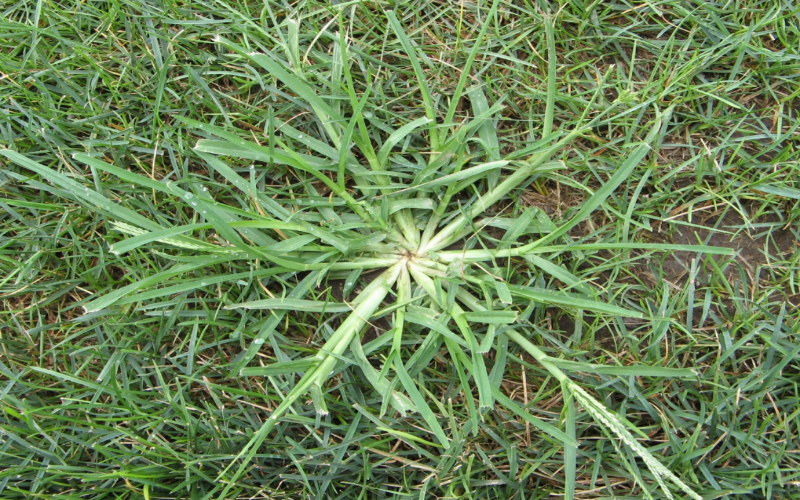
Goosegrass is a tropical grass that grows prostrate or slightly upright in lawns. It has flattened, branching stems that typically form a tough and clumpy growth, especially in high-traffic areas or thinning turf.
The grass can be easily identified by its stem rosette formation with prominent white or silver leaf sheaths at the base and dark-green folded leaf blades.
It is a problematic weed because of its prolific seed production and aggressive growth. If you’re dealing with a small infestation, hand-pulling may be effective.
Herbicides indicated for Goosegrass control include MCPP, topramezone, fenoxaprop-p-ethyl, and dicamba.

Lead Editor for Insight Weeds.