Urochloa trichopus is a tufted grass that grows up to 1.5m tall. It is native to tropical Africa, Madagascar, subtropical Asia, and the Arabian Peninsula. It mainly spreads by stolons.
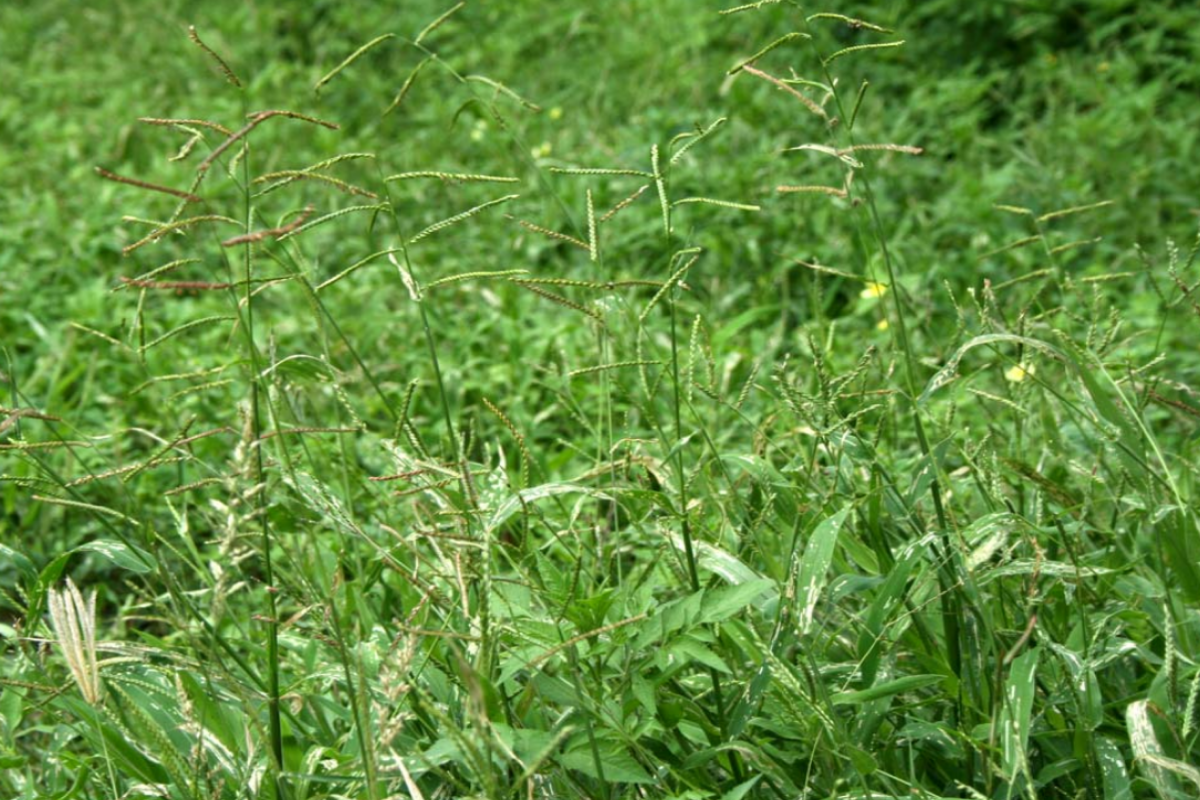
You can easily identify the grass by its erect or ascending culms, alternate, tapering leaves, and hairy to minutely hairy leaf sheaths.
Signal Grass Classification
- Domain: Eukaryota
- Kingdom: Plantae
- Phylum: Tracheophyta
- Subphylum: Angiospermae
- Class: Monocotyledonae
- Order: Poales
- Family: Poaceae
- Genus: Urochloa
- Species: Urochloa trichopus
- Common Names: Common Signal Grass or Bushveld Signal Grass
Nativity and Distribution
Signal grass is native to tropical and southern parts of Africa, subtropical Asia, western Madagascar, and the Arabian Peninsula in countries like:
- Angola
- Congo
- Ethiopia
- Kenya
- South Africa
- Zimbabwe
- Zambia
- India
- China
- Saudi Arabia
- Yemen
Physical Characteristics
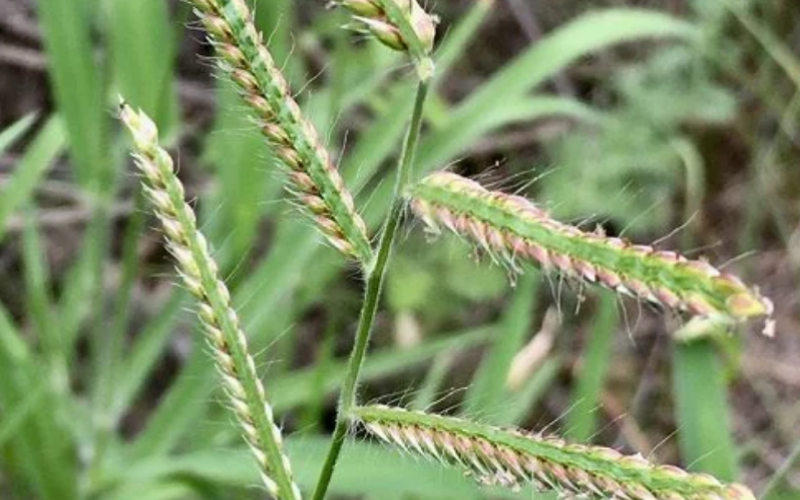
- Leaves: Alternate, linear, leaves tapering to a long point
- Fruits: Strongly flattened caryopsis
- Stems: Erect or ascending culms that can reach up to 1.5m
- Flowers: Panicle comprising 3-20 racemes on a narrow axis
- Roots: Fibrous root system
Urochloa trichopus is a clump-forming or tufted grass that sometimes shows stoloniferous tendencies and grows between 20 and 150 cm tall.
It is easily identified by its erect or ascending culms, alternate, tapering leaves, and glabrous to minutely hairy leaf sheaths.
The leaves are alternately arranged, linear, tapering to a long point, about 5-30mm long and 5-20mm wide. The leaf sheath is glabrous to minutely hairy. Culms are erect to ascending, reaching up to 1.5m in favorable conditions.
Signal grass produces a panicle consisting of 3-20 racemes borne along a central axis, about 20 cm long. Spikelets (2.5-5.5mm) are ovate, featuring a lower male stamen and upper bisexual florets. The seed is a strongly flattened caryopsis.
Reproduction, Dispersal, and Life Cycle
- Life Cycle: Annual
- Seeds: It is a prolific seed producer
- Climate: Tropical and subtropical climates
- Dispersal: Wind and water
Signal grass behaves as an annual, thriving in the tropical and subtropical climates. It produces many seeds with high viability. The seeds are small and light, easily dispersed by wind and water.
The grass also reproduces by stolons, which root at the node. This propagation strategy typically occurs more in the native settings, while both stolons and seeding are used for other uses. However, freshly gathered seeds go through dormancy for 6-12 months.
The grass can thrive on a variety of soils, including fertile and moist sandy loam soil or clay loam soil, and will tolerate drought and heat. It also prefers full sun and will not tolerate cool temperatures.
Similar Plants
- Urochloa brizantha
- Urochloa decumbens
- Urochloa oligotricha
Uses
- It is a good fodder plant in semi-arid areas.
- It is gathered as food in parts of Southern Africa, such as Botswana and Zimbabwe.
Impact on Farms and Environment
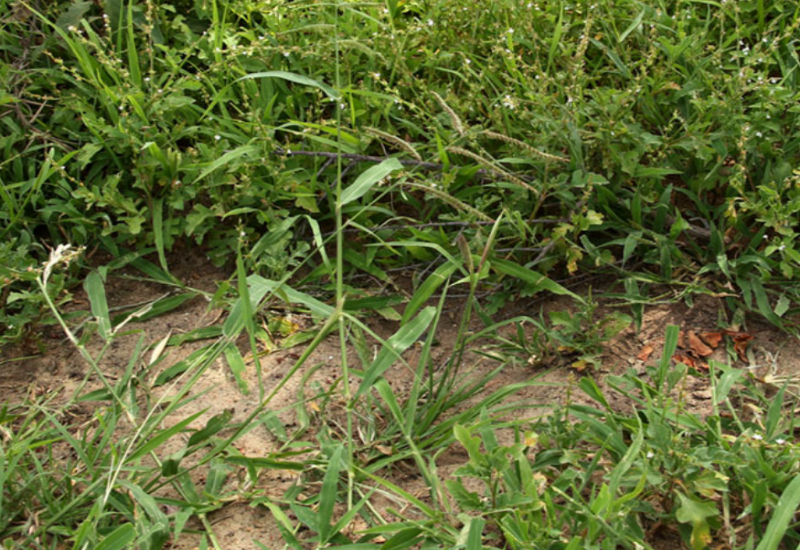
U. trichloa can offer valuable fodder in dry environments, enhancing livestock feeding strategies. It also supports food security in arid areas during scarcity, where seeds are consumed or ground as flour.
The grass grows in secluded habitats such as wooded and savanna grasslands and in semi-arid areas. Therefore, it is not a serious weed in cropping systems and gardens.
However, as a pioneer in disturbed environments, it may compete with native vegetation. Its high seed production and favorable conditions may allow it to displace other plants, but its invasive nature is not documented.
Control
- Cultural control: Grazing can limit the spread of the grass
- Mechanical control: Cutting, hand-pulling, and tilling
Since Signal grass is palatable, practicing strategic grazing can help keep the grass growth under control where it is considered to have overgrown.
If it invades undesired areas, mechanical strategies like hand-pulling, cutting, and tillage before seed set can reduce reproduction.
Overall, an integrated management system combining rotational grazing, timely removal before flowering, and monitoring regrowth will provide the best control results.

Lead Editor for Insight Weeds.