For ranchers and farmers, grass is a vital part of their economic ecosystem as it provides steady nutrition for their livestock. However, not all grasses are created equal. Some are extremely beneficial, while others do more harm than good.

One such grass that is proving detrimental is the African Lovegrass, also known as Eragrostis curvula.
It is not only spreading fast, outcompeting native vegetation, but also negatively impacting livelihoods across various parts of Australia.
The Quick Spread of African Lovegrass in Australia
African Lovegrass has been rapidly spreading across several regions for the past 50 years. They include southeastern Queensland, throughout New South Wales and Victoria, and in a few areas in the eastern part of South Australia.
It is estimated that the grass has overtaken about 150,000 hectares of grazing land in New South Wales. The grass infestation is expected to affect a further 100,000 hectares in the next five years.
While it typically spreads faster in bare areas, the weed can easily outcompete native grasses growing in neighboring lands.
The clumpy grass produces a large biomass, eliminating any potential for other plant species to grow alongside it.
Why Is It an Emergency for Ranchers and Farmers?
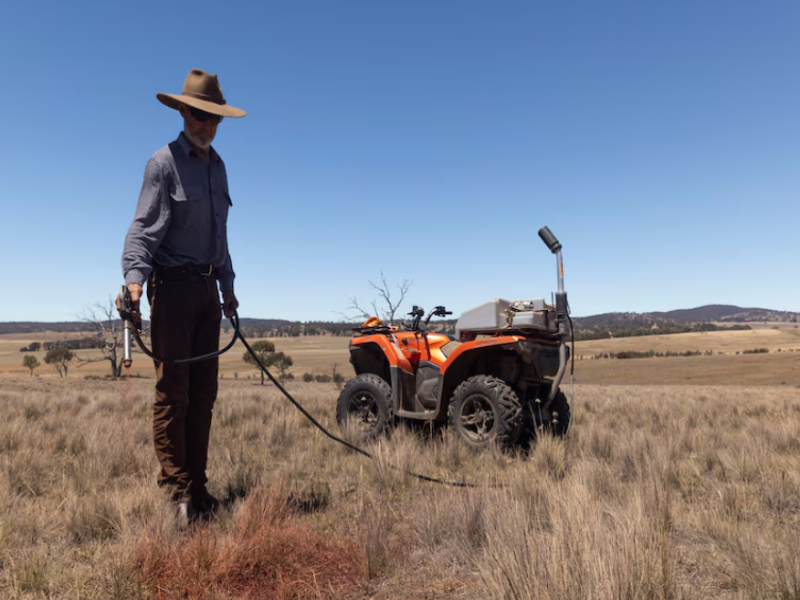
Ranchers are on the lookout for new grass varieties that can improve their livestock nutrition and overall profits. When it comes to the African Lovegrass, all it brings are losses.
First, the weed is quickly replacing the native grasses that sustain livestock in these regions, leaving ranchers with little to no grazing lands.
Secondly, it is extremely low in nutrition, and livestock that graze on it require extra by-pass protein supplementation, leading to more feed costs.
Thirdly, the straw-like weed is readily combustible. Due to its high biomass, once it dries up, it can become a deadly fire hazard.
Since the grass is a weed, it also requires expensive and labour-intensive control programs.
Ross Sherlock, a merino and beef cattle farmer from Cooma, NSW, spends about $100,000 spot-spraying the weed each year. “It’s not sustainable. There’s got to be another way, or I’ll go broke doing it,” he laments.
While he takes other strict measures, such as placing animals in quarantine and not moving machinery between properties, he fears it’s a losing battle.
How Can Legislation Help in Eradicating African Lovegrass?
Many of the native grasslands are listed as critically endangered. Farmers are not allowed to conduct widespread spraying of the grass or controlled burning unless the grass affects 50% of the grazing land.
With limited control options, locals such as Ross are drafting land management plans they hope their local and federal governments will approve before it’s too late.
The Natural Resource Commission has also been tasked with reviewing the grassland regulations, with recommendations expected at a later date.
Charles Howard, a trustee at the research farm Coolringdon, believes the farmers can control the grass using the traditional methods, especially if it’s only in a few spots on the land.
However, he reinforces the need for financial support and legislative changes for long-term and effective control of African Lovegrass.

Lead Editor for Insight Weeds.