Waterhemp remains one of the toughest weeds in North America’s crop fields. Across the cornbelt, in particular, farmers are in a never-ending race against the weed. It is steadily exhibiting resilience against common herbicides, leading to lower yields and increased weed control costs.
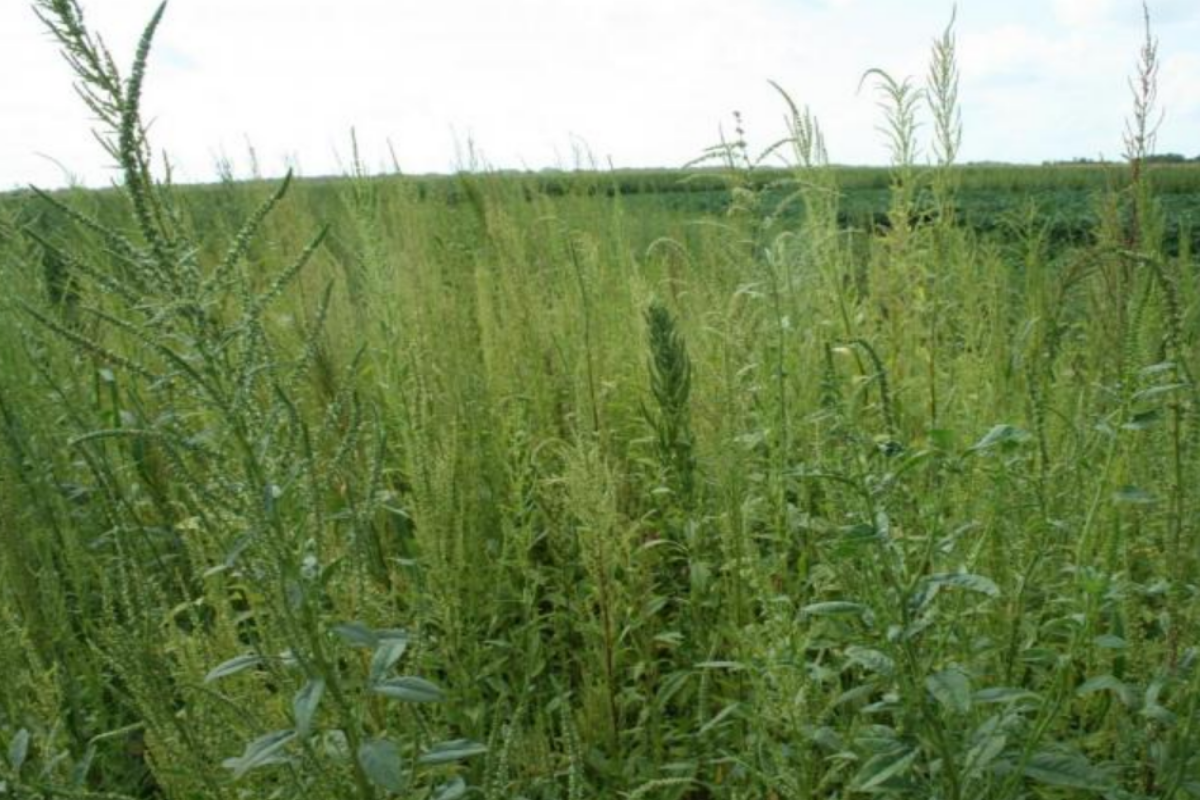
But not Troy Monaghan. The farmer from Iowa is implementing a strategic two-pass herbicide program that is keeping the stubborn weed in his corn farm at bay throughout the season.
Let’s learn more.
The Two-Pass Herbicide Program — What Does it Entail?
Before spraying the herbicides, Monagan ensures that the seeds are well matched with each field’s soil type for the best results.
He then deploys the herbicides as follows:
- A preemergence burndown with nitrogen prior to planting
- A postemergence pass using Resicore REV Herbicide — an advanced premix of three ingredients, mesotrione, clopyralid, and acetochlor (a mixture of glyphosate and atrazine) for extra grass and residual control.
The Two-Pass Herbicide Strategy Benefits
Monaghan has followed this approach for two years, and the results have been impressive.
“There was some early weed pressure around the field edges and waterways, but the herbicides cleaned everything up. The fields were spotless after that postemergence pass, he said.
The herbicide not only controls waterhemp but also provides up to eight weeks of residual control.
While waterhemp may remain a moving target, Monaghan is happy with the efficiency the current strategy offers.
The encapsulated acetochlor formulation is easy to mix, saving him time, adds an extra layer of safety for his crops, and also slows down the development of waterhemp resistance.
In the coming year, Troy is upbeat about using the approach again, as a quick walk-through has cemented the herbicides’ ability to hold strong all season.
“It’s one of the most effective tools we’ve used, and it’s helping us hit our goals for yield potential, labor, and cost per acre.”

Lead Editor for Insight Weeds.