Isotoma fluviatilis is an evergreen, mat-forming, herbaceous perennial that grows 2-8 cm long while spreading about 30-60 cm wide. Also known as the Swamp Isotome, this species is native to Australia and can be found in streambanks, moist grasslands, and wetlands.
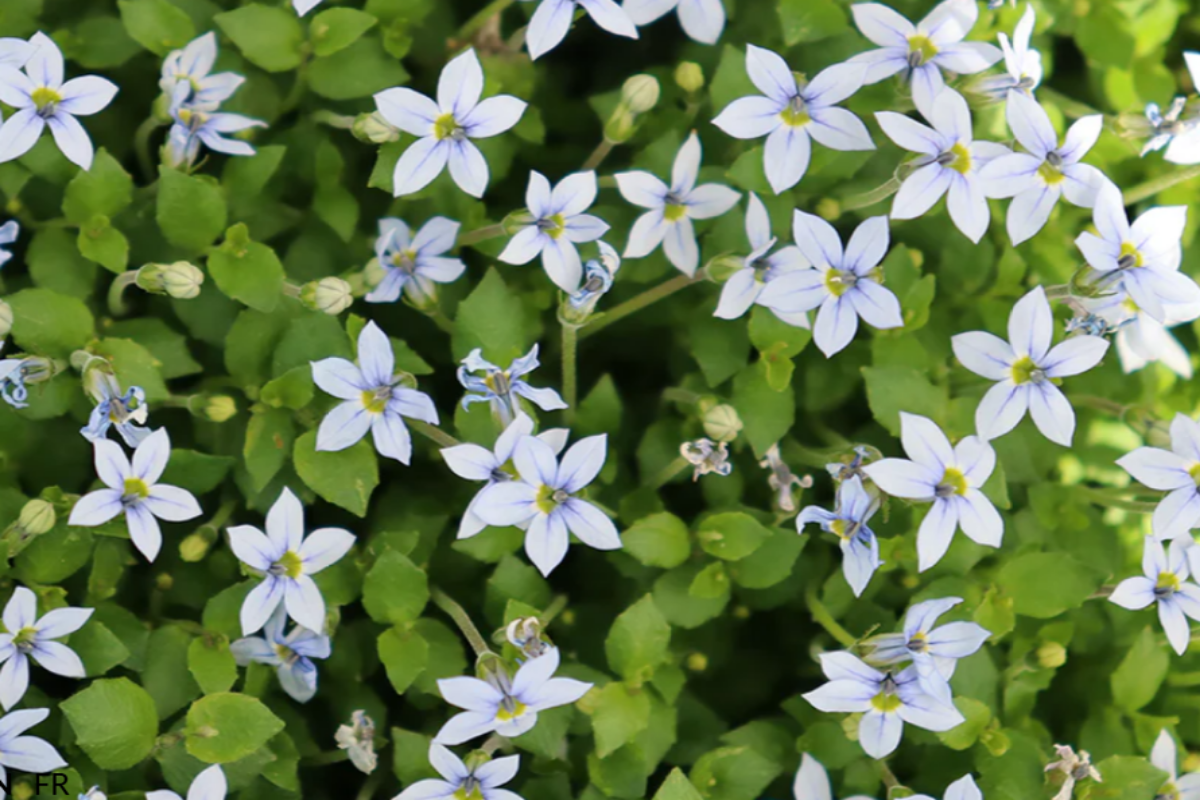
It is easily identified by its small, bright green, rounded leaves with a mat-forming habit and white-blue star-shaped blooms that appear much of the growing season.
Blue Star Creeper Classification
- Domain: Eukaryota
- Kingdom: Plantae
- Phylum: Tracheophyta
- Subphylum: Angiospermae
- Class: Magnoliaspida
- Order: Asterales
- Family: Campanaluceae
- Genus: Isotoma
- Species: Isotoma fluviatilis
- Common Names: Swamp Isotome, Creeping Isotome, Laurentia, Australian Bluebell, and Matted Pratia
Nativity and Distribution
Blue Star Creeper is native to eastern Australia, ranging from the Queensland-New South Wales border to the South Australia-Victoria border, including Tasmania. It has also been located in New Zealand.
As a popular groundcover, the species has since been introduced to other regions such as Europe and North America.
Physical Characteristics
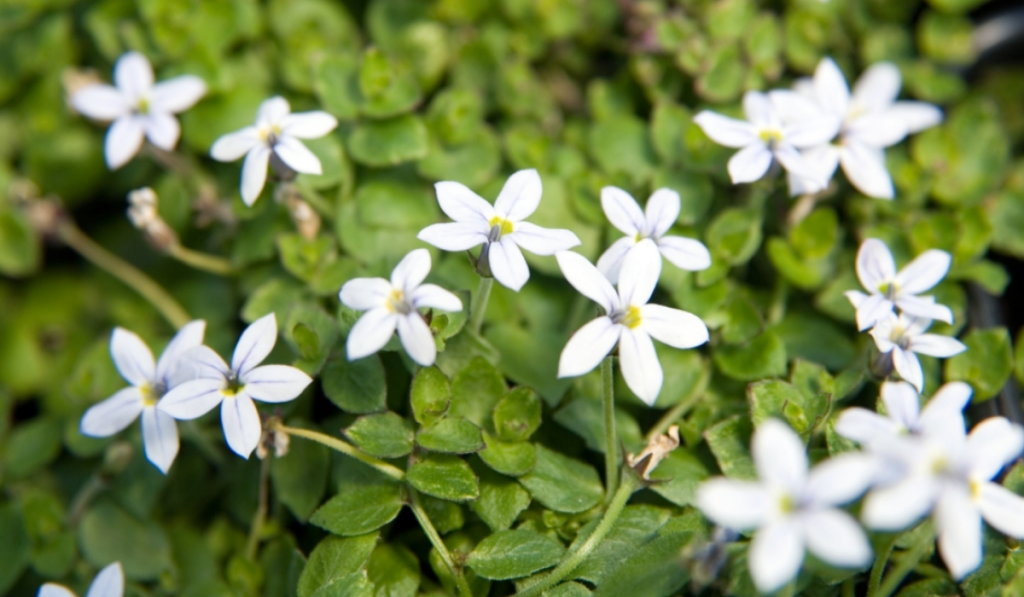
- Leaves: Alternate, small, bright-green, oblong to elliptic, 5-20 mm long
- Fruits: Slightly asymmetric, obconical to obovoid, 3-6mm long
- Stems: Slender, creeping, highly branched, and growing across the soil surface
- Flowers: Small, star-shaped, pale blue to white blooms
- Roots: Fibrous root system
Swamp Isotome is an evergreen herbaceous creeping plant that grows 2-8 cm long while spreading about 30-60 cm wide. You can easily recognize the species by its slender, low-growing stems, small, bright green, rounded leaves with a mat-forming habit, and white to pale blue, star-shaped blooms.
Stems are slender, creeping, and highly branched, allowing the plant to spread rapidly. Combined with underground rhizomes, it forms sprawling, dense mats that easily suppress other low-growing plants.
Isotoma fluviatilis leaves are tiny, alternate, bright-green, oblong, elliptic, or linear, although the lower leaves may be obovate or ovate in shape. They are typically pubescent or sometimes glabrous and about 5-20 mm long and 2-8 mm wide.
Blue Star Creeper flowers are small, star-shaped, five-petaled blooms that grow on the side of stems. They are pale blue to white-blue, measuring 8-15 mm wide. Due to its sprawling nature, the flowers form a distinctive carpet of colour during the blooming season, which is typically between November and March.
The seed is extremely tiny, brown to black, elliptical, with a slightly wrinkled texture.
Reproduction, Dispersal, and Life Cycle
- Life Cycle: Perennial
- Seeds: A single plant can produce thousands of seeds
- Climate: Thrives best in cool to warm temperate and mild subtropical climates
- Dispersal: Falling, vegetative means, and human activities
Isotoma fluviatilis behaves as an evergreen perennial or semi-evergreen herb. A single plant can produce hundreds to thousands of seeds, depending on the prevailing environmental conditions.
The majority of the seeds typically fall beneath the parent plant and readily germinate when they come into contact with moisture and adequate light.
However, the species primarily disperses vegetatively through creeping stems that root at the nodes. These nodes produce new shoots continuously to allow for rapid colonization.
Human activities, including nursery production, sale, and landscaping projects, have also enabled the spread of the plant in new environments.
Blue Star Creeper thrives in moist to wet, well-drained, sandy to loamy soils and partial shade. The species can tolerate short drought seasons.
Similar Plants
- Pratia nummularia
- Veronica repens
- Lobelia angulata
- Soleirolia soleirii
Uses
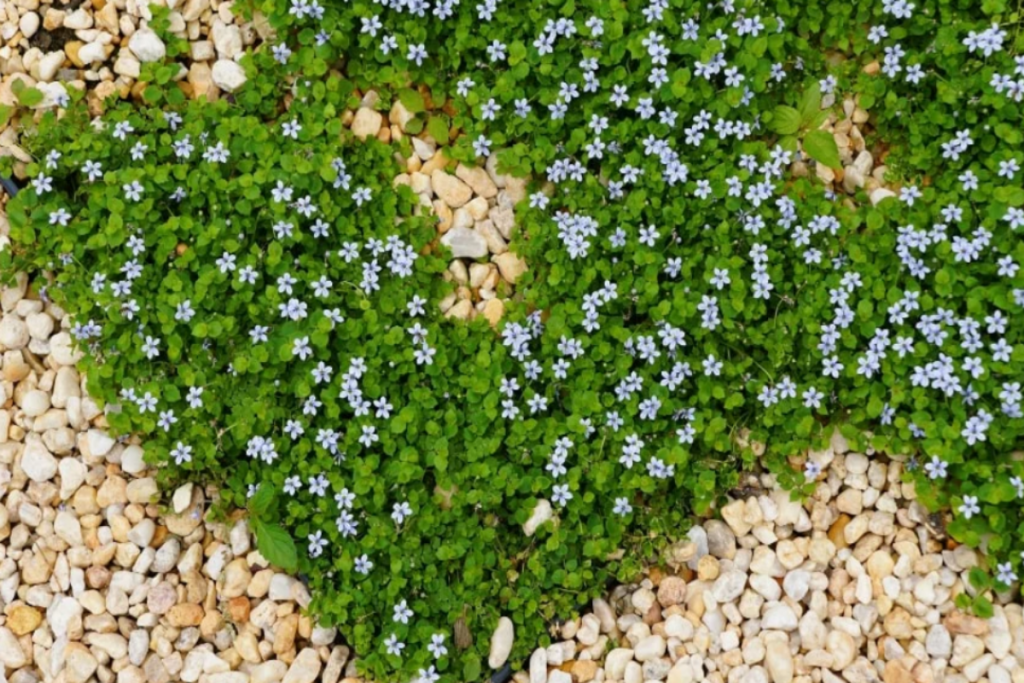
- It is grown as groundcover for gardens and landscapes, including between pavers, ponds, decks, edges, and rockeries.
- The species can be used as a lawn substitute in low-traffic areas.
- Blue Star Creeper is a popular plant in pollinator gardens to provide pollen for small, beneficial insects.
- The plant can be incorporated in water-wise landscaping in regions with moderate moisture availability.
- Creeping Isotome is grown on sloped areas and moist banks to prevent erosion.
Impact on Farms and Environment
Isotoma fluviatilis has minimal negative impact when grown responsibly. It helps sustain livelihoods through nursery production, retains moisture in garden beds, provides dependable perennial groundcover for various landscaping settings, and suppresses weed establishment.
That said, highly fertilized or escaped populations can spread to adjacent garden beds and disturbed habitats, but it is typically not considered a major invasive plant species.
The creeping plant is also not a concern in agricultural settings and rarely affects farming operations.
Control
- Mechanical control: Hand-pulling, digging, and mulching
- Cultural control: Regular trimming of garden edges
- Chemical control: Apply herbicides like Dicamba, triclopyr, or glyphosate
While Blue Star Creeper is mostly grown intentionally, it can escape and become a pesky weed in garden settings.
In this case, measures like hand-pulling and digging can be effective for small infestations. Since the stems root at the nodes, it’s important to dispose of all the fragments properly to prevent regrowth.
Regular trimming of garden edges can also help limit the spread to unwanted areas. Monitor the areas close to new plantings to allow for early intervention where needed.
For larger infestations, repeat applications of chemical herbicides containing triclopyr, dicamba + 2,4-D, or spot treatments of glyphosate can be effective.
Ensure that you read the product label and use the chemical herbicide as per the instructions given to avoid negatively impacting your desirable garden plants.

Lead Editor for Insight Weeds.