Paspalum dilatatum is a strongly tufted perennial, warm-season grass, reaching about 45-150 cm in height. It is native to South America and is a common weed in heavily irrigated lawns, pastures, wet roadsides, and disturbed sites.
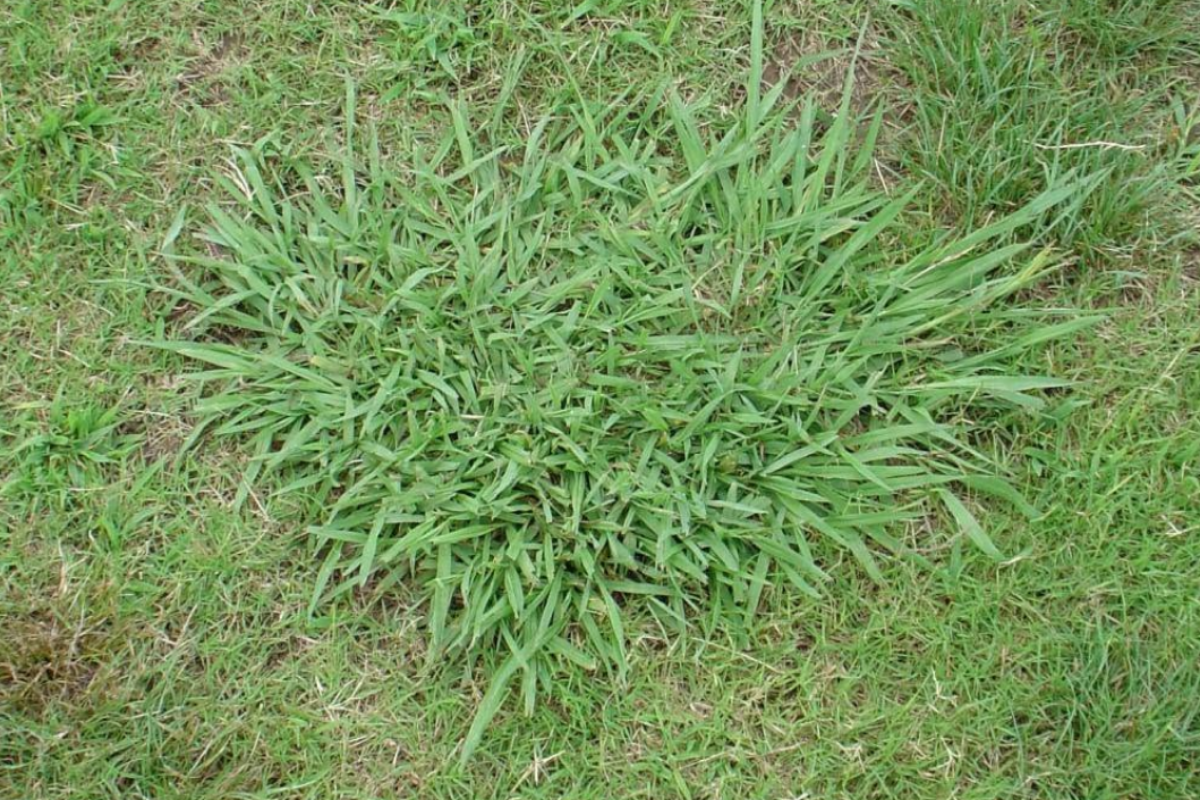
It is easily recognized by its coarse, blade-shaped gray-green leaves and distinctive seedhead with 2-10 drooping finger-like racemes lined with egg-shaped seeds.
Dallisgrass Classification
- Domain: Eukaryota
- Kingdom: Plantae
- Phylum: Tracheophyta
- Subphylum: Magnoliophyta
- Class: Liliospida
- Order: Poales
- Family: Poaceae
- Genus: Paspalum
- Species: Paspalum dilatatum
- Varieties: P. dilatatum var. dilatatum, P. dilatatum var. flavescens, P. dilatatum var. pauciciliatum, P. dilatatum var. subciliare
- Common Names: Dallis Grass, Water Grass, Sticky Heads, Dallas Grass, and Paspalum
Nativity and Distribution
Dallisgrass is native to South America, including Brazil, Argentina, Bolivia, Paraguay, Uruguay, and Chile.
Today, it is naturalized in other temperate, tropical, and subtropical areas, such as North and Central America, Australia, Africa, New Zealand, Southern Europe, and parts of Asia.
Physical Characteristics
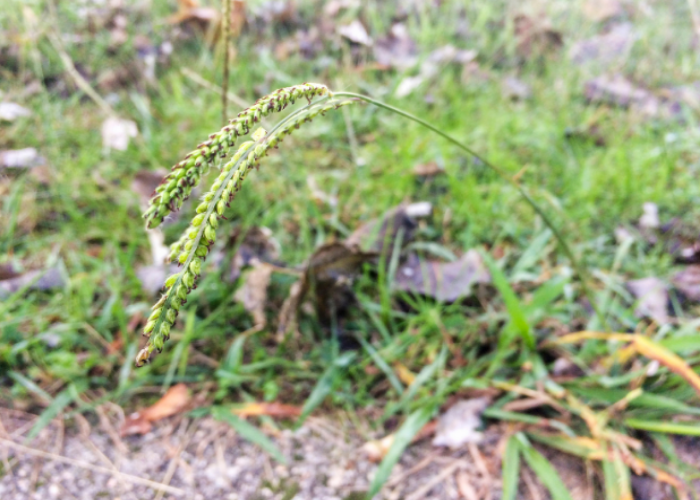
- Leaves: Flat, blue to gray-green, blade-shaped leaves, about 4-25 cm long
- Fruits: Dark brown caryopsis, 2-2.3 mm long
- Stems: Upright, stout, growing 45-150 cm long
- Flowers:Terminal inflorescence comprising paired spikelets
- Roots: Fibrous root system
Paspalum dilatatum is a strongly tufted, perennial, warm-season grass reaching about 45-150 cm in height. You can easily identify it by its blade-shaped gray-green leaves and distinctive seedhead with 2-10 drooping finger-like racemes lined with egg-shaped seeds.
Stems are upright, stout, and tufted, growing to a height of 45-150 cm, and arise from a dense crown to form large clumps.
The leaves are flat, coarse, blade-shaped, blue to grayish-green in colour, and about 4-25 cm long and 5-15 mm wide. Blades have rough margins with a prominent midrib.
At the base of the leaf is a sparsely hairy collar, with a 6 mm ligule and no auricles. The sheath at the base of the collar is slightly flattened, sometimes hairy, with a purple colouration at the base.
Dallis Grass produces flowers arranged on a terminal inflorescence composed of 2-11 oval, slender spikelets. The spikelets are paired, alternately arranged, and green to purplish in colour. Flowering typically occurs in late spring through autumn under favorable conditions.
The Paspalum dilatatum seed is elliptic, sticky, reddish-brown, and 2mm long.
Reproduction, Dispersal, and Life Cycle
- Life Cycle: Perennial
- Seeds: A single plant can produce 15,000 – 80,000 seeds
- Climate: Thrives best in temperate, tropical, and subtropical climates
- Dispersal: Animals, water, wind, human activity, and vegetative growth
Paspalum is a perennial grass that survives year to year through its roots, crown, and rhizomes. However, the grass primarily reproduces by seeds.
Individual plants can produce approximately 15,000 – 80,000 seeds, depending on size and environmental conditions. An ergot fungus produces a sticky coating on the seeds that makes it easier to attach to animal fur for dispersal.
Other common means of dispersal include wind, contaminated mowing equipment, hay, and farming machinery. Rainfall and roadside maintenance can also spread the seeds over longer distances.
Germination of Dallisgrass seeds is triggered by late spring temperatures and abundant rainfall. The new seedlings form plants on short rhizomes that have developed from the initial root system.
Under this growth format, the seedlings grow twice as fast compared to other grasses, overtowering desirable lawn turf. Seeds in the ground can remain dormant for over 30 years.
Dallis Grass thrives best in warm temperate, tropical, and subtropical climates. Optimal growth conditions are fertile and moist soil (red loams or alluvial clay soils), but it can tolerate a wide range of soils where moisture is present.
As a highly adapted grass, it is exceptionally tolerant of drought due to its thick rhizomes, low rainfall, and mild frost.
Dallis Grass is commonly sighted on heavily irrigated lawns, pastures, moist grasslands, orchards, vineyards, drainage ditches, wet roadsides, and disturbed sites.
Similar Plants
- Papsalum distichum
- Papsalum notatum
- Papsalum setaceum
- Digitaria sanguinalis
- Digitaria ischaemum
Uses
- Papsalum is a valuable forage for cattle, goats, sheep, and horses as it withstands heavy grazing.
- The grass produces high-quality silage, making it an important livestock food source in dry seasons.
- Its deep root system and vigorous growth make it a valuable plant for soil stabilization and erosion control.
- It is grown as a ground cover in disturbed sites.
- The grass is a habitat and food source for some wildlife and birds.
Impact on Farms and Environment
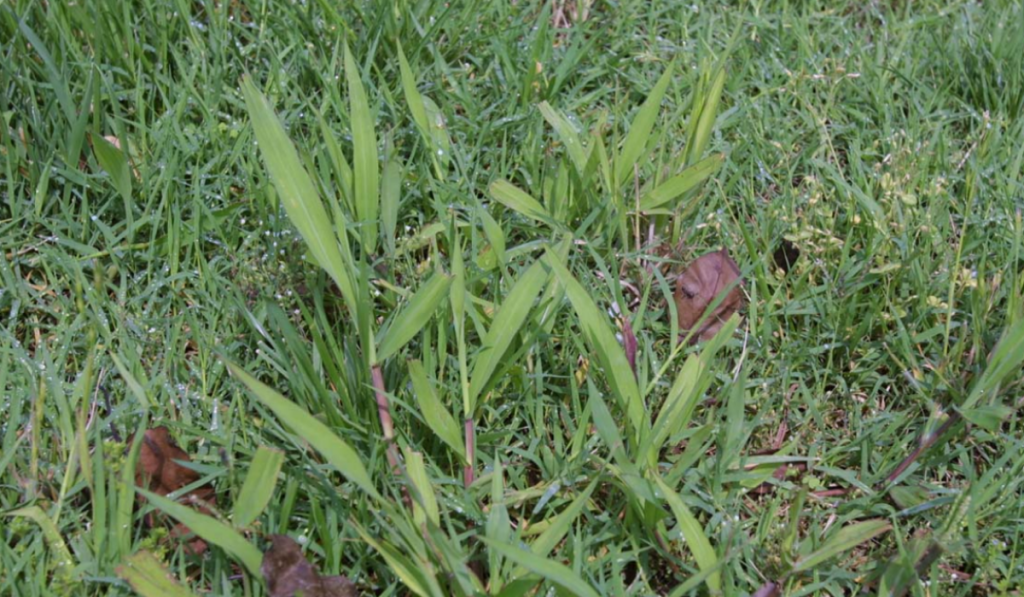
Dallisgrass is considered a troublesome weed in crop fields. It competes strongly with crops for important resources. In newly established vineyards and orchards, for instance, the grass competes for soil moisture and nutrients, severely impacting cash crop growth and yield quality.
Its vast seed bank and rapid growth makes it a problematic weed, as it can quickly invade crop fields. The thick clumps not only take up space but also easily choke desirable plants.
Additionally, once established, it becomes difficult to eradicate through simple methods like pulling and digging, often requiring expensive and prolonged chemical control measures.
While Dallis Grass is an important forage grass, it can also become a problematic weed in pastures. It often outcompetes other desirable forages, especially if the grazing areas are not well managed.
Seedheads on older grass strands are susceptible to ergot fungus, Calviceps paspali, and can cause Dallis Staggers in livestock. Several days after consuming a significant amount of the infected seedheads, the animals may experience symptoms like weakness, unc, and severe muscle tremors, with convulsions and death occurring in extreme cases.
The unsightly and uneven clumps often create problems in turfgrass, causing significant problems, especially where even surfaces and aesthetics are valued. These areas include residential lawns, golf courses, recreational parks, and sports fields.
Its fast growth and adaptability to low mowing heights make it a difficult weed to eradicate. Additionally, its clumpy and coarse nature can make it a tripping hazard when present in other softer turfgrasses.
Control
- Mechanical control: Digging out the crown and root system
- Cultural control: Maintaining a healthy lawn and renovation
- Chemical control: Herbicide applications based on specific site
Effective manual management of Dallisgrass relies heavily on digging out the crown and the entire root system. This measure is most successful when plants are young and before they form rhizomes or set seed.
In lawns, persistence is required if digging is the preferred strategy to eradicate the weed. Ensure that you overseed or sod the bare spaces to prevent weed reemergence. Adjusting poor irrigation and fertilization methods while the grass is young can also reduce the spread of the weed and allow for easy removal.
The most important measure is to maintain a healthy, dense, and vigorous turf, as this allows the desirable grass to resist an invasion. If the weed becomes established and digging is impractical, you may have to consider lawn renovation.
Herbicide applications largely depend on the type of grass (warm or cool season) and the site of the infestation. Since established Dallisgrass is difficult to eradicate, several applications are required at specific times for effective control.
A detailed resource can assist you in selecting the right product for your orchard, ornamental bed, or landscape. If you’re unsure, consult a local extension expert for further advice.

Lead Editor for Insight Weeds.