Celosia argentea is a fast-growing annual herbaceous plant in the Amaranthaceae that grows 0.6-1.2m tall with a spread of 50-60m. The herb is believed to be native to North Africa, although it has been cultivated in Asia and other regions globally for centuries.
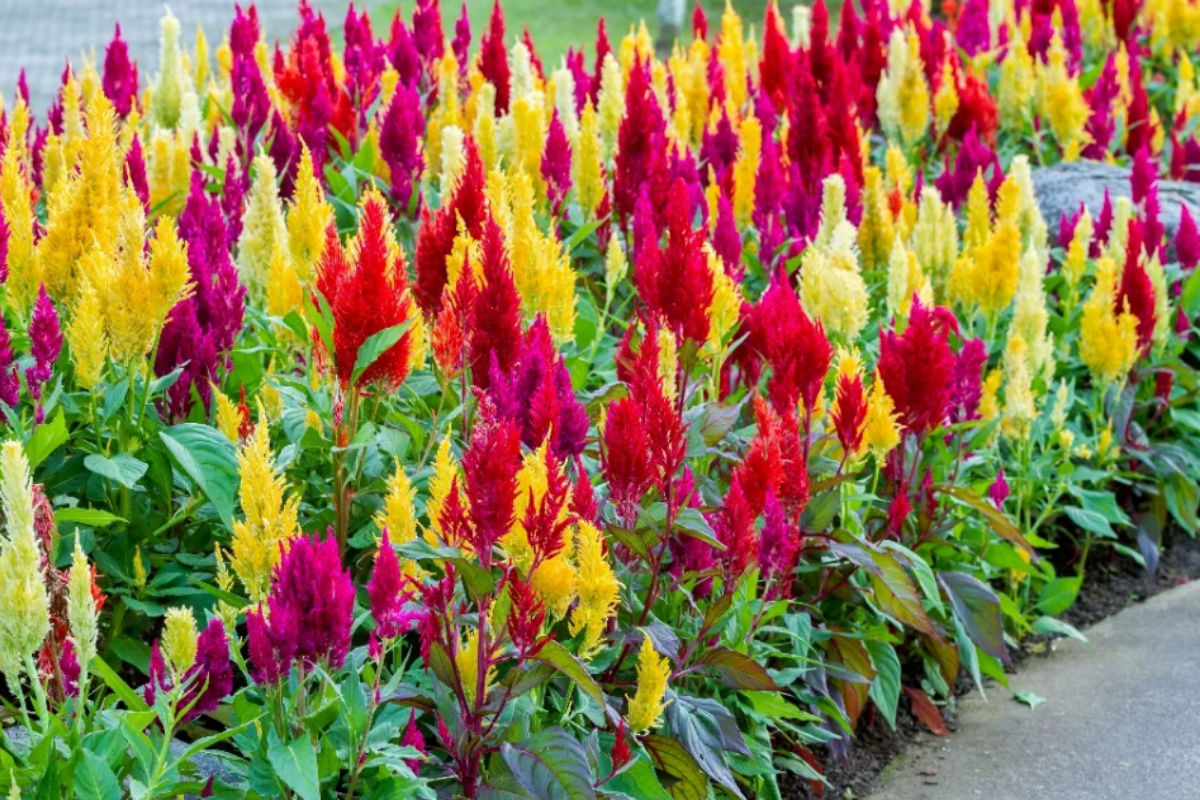
It is easily recognizable by its alternate, smooth, lance-shaped leaves and showy, brightly coloured papery flowers, borne on terminal plumes.
Silver Cock’s Comb Classification
- Domain: Eukaryota
- Kingdom: Plantae
- Phylum: Tracheophyta
- Subphylum: Angiospermae
- Class: Magnoliaspida
- Order: Caryophyllales
- Family: Amaranthaceae
- Genus: Celosia
- Species: Celosia argentea
- Varieties: Celosia argentea var. Argentea, Celosia argentea var. Spicata, Celosia argentea var. plumosa, and Celosia argentea var. cristata
- Common Names: Silver Cockscomb, Plumed Cockscomb, Cockscomb, Celosia, Quail Grass, Cock’s Comb, Feather CocksComb, Common Cockscomb, and Woolflower
Nativity and Distribution
Silver Cock’s Comb is native to North Africa. However, it has also been widely cultivated in tropical Asia for centuries, making it a cited native habitat for the herb.
Today, it is widely distributed across Africa, Asia, tropical parts of North America, Central America, and South America.
Physical Characteristics
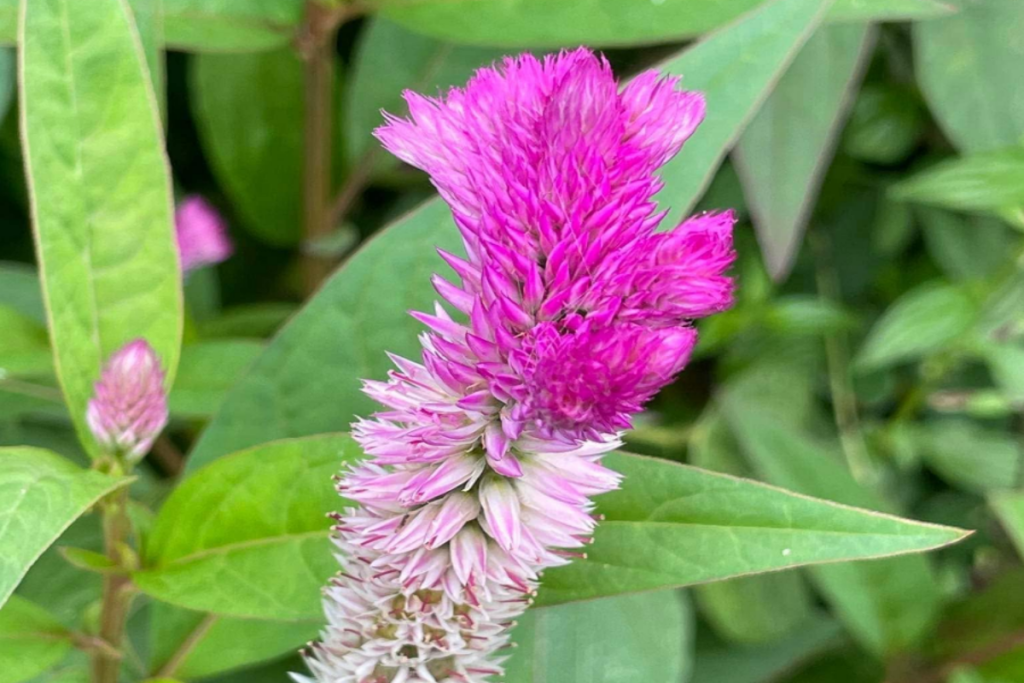
- Leaves: Alternate, smooth, ovate-lanceolate to lance-linear, about 2-15 cm long
- Fruits: Small, dry capsule, about 4 mm long
- Stems: Erect, ridged, branching near the top, reaching up to 1.2m tall
- Flowers: Showy, densely packed terminal inflorescences
- Roots: Tap root system
Silver Cock’s Comb is a fast-growing annual herbaceous plant in the Amaranthaceae that grows 0.6-1.2m tall with a spread of 50-60m. You can easily recognize it by its alternate, smooth, lance-shaped leaves and showy, brightly coloured papery flowers, borne on terminal plumes.
Stems are upright, succulent when young and firmer when mature. It can have a single or numerous branching stems that are strongly ridged, forming a bushy appearance. Depending on the variety, the stems can be green, reddish, or purple in colour, glabrous, and hairless.
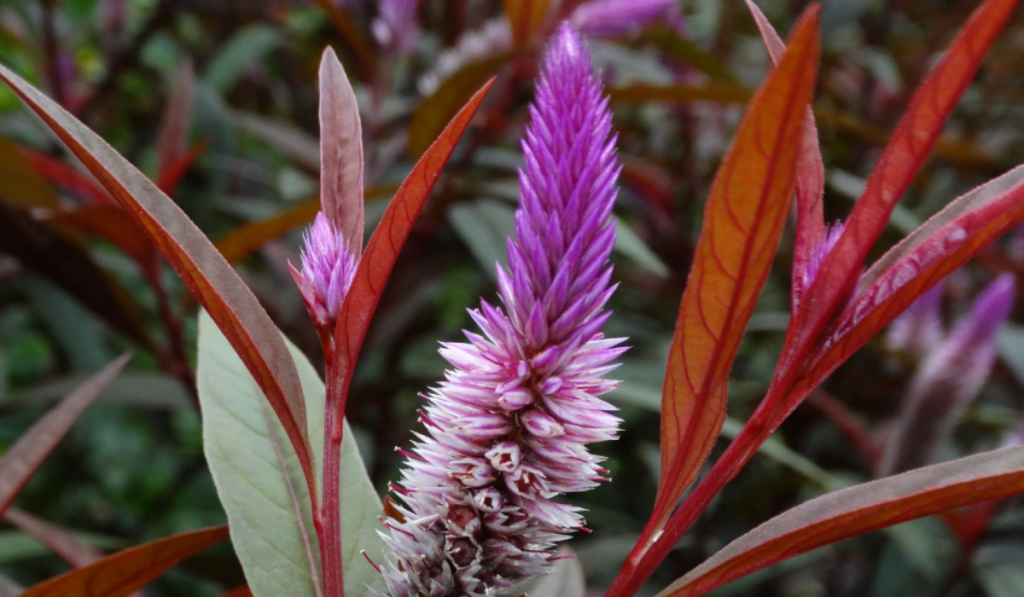
The leaves are simple, alternate, and ovate-lanceolate to narrowly linear, measuring 2-15 cm in length. They are conspicuously veined, tapered into indistinct stalks, with entire margins. The lower leaves are larger, with the size reducing towards the upper part of the stem.
C. argentea flowers are small, densely packed into showy, terminal inflorescences. The colour varies from silver, pink, red, orange, or yellow. Depending on the variety, the flower heads may be plumed, crest-like, spiked-shaped, or feathery.
Flowering typically occurs between July and October but can continue for several more months under favorable conditions.
The seed is small, glossy black in colour, round to lens-shaped, and about 1-1.5 mm long.
Reproduction, Dispersal, and Life Cycle
- Life Cycle: Annual or short-lived perennial
- Seeds: A single plant produces 5,000 – 20,000 annually
- Climate: Thrives best in tropical climates
- Dispersal: Wind, water, and human activity
Celosia argentea behaves typically as an annual but can be a short-lived perennial in some climatic regions. The plant readily reproduces by seed. Common Cockscomb is a prolific seed producer, releasing several thousand to 20,000 seeds, depending on the cultivar and environmental conditions.
Apart from falling beneath the parent plant, the seeds are primarily dispersed by wind across short distances. Rainfall runoff also disperses seeds into gardens and nearby fields.
Its popularity as an ornamental and vegetable has led to further distribution in new areas. Seeds are commonly distributed through gardening activities and soil contamination.
Cockscomb thrives in tropical climates. The plant prefers dry or moist soil and semi-shade and can tolerate short periods of drought.
Silver Cock’s Comb thrives on roadsides, waste lands, crop fields, construction sites, and disturbed sites.
Similar Plants
- Celosia trigyna
- Celosia isertii
- Celosia cristata
Uses
- Silver Cockscomb is valued as an ornamental plant for its colourful flower displays.
- The flowers and leaves are consumed as a vegetable in West and Southeast Africa and Asia.
- The plant is grown in pollinator gardens to support bees and butterflies.
- Harvested leaves, roots, and seed material are mixed with water and used as a natural soap in traditional practices due to the plant’s high levels of saponins.
- It is grown in certain settings to control the parasitic Striga plant.
Impact on Farms and Environment
Celosia argentea is a popular ornamental and pollinator plant and does not prove invasive if well monitored in nursery and garden settings. However, escaped populations can spread into crop fields, competing for important resources.
Large infestations are known to displace desirable crop plants. The plant also releases allelopathic compounds that reduce or completely inhibit germination of seedlings in crops like lentils, pearl millet, green grams, sorghum, and legumes.
Additionally, since it’s a late weed, it also interferes with crop harvesting, compounding the overall negative impact on crop production and yield quality.
Despite extensive removal efforts in crop fields, Cockscomb can resprout quickly because of its persistent seed bank and fire resistance. This increases overall production costs for farmers struggling with the weed.
In non-native environments, Cockscomb creates dense growth that can reduce native plant biodiversity, making it a pesky weed that requires monitoring.
Control
- Mechanical control: Hand-pulling, cutting, and regular mowing
- Chemical control: Spot spraying treatments of herbicides like pendimethalin and glyphosate
Hand-pulling and cutting are viable options for removing young plants. Removing the plants before flowering can prevent seed production and future infestations. Regular mowing and cutting can help suppress growth, but does not prevent resprouting.
Herbicides can provide effective control for larger infestations or where hand-pulling may be impractical. Pre-emergent herbicides like pendimethalin and alachlor are applied before crop emergence in agricultural settings.
Post-emergent herbicides such as imazethapyr and glyphosate can also provide control where infestations become problematic.
Ensure that you read the label and use the herbicide as prescribed. If you’re unsure about the right usage, consult an extension expert to learn more about crop-specific recommendations and local regulations concerning herbicide applications.

Lead Editor for Insight Weeds.