Waterhemp became a major agricultural weed in the early 1990s. It is thought that the minimum tillage strategy pre and post-planting adopted by many farmers allowed the weed to evolve into the serious agronomic nightmare it is today.

Now, soybean and corn farmers are forced to come up with ingenious ways to get ahead of the weed, early. That’s where pre-emergence herbicides come in.
A strategic pre-emergence application has been shown to eliminate 98% of the weed, but only if done right.
Waterhemp Weed Control Background
For years, farmers have preferred to wait for the waterhemp plants to emerge and control them with postemergent herbicides.
However, extension experts are warning that the spraying time window is getting slimmer each year, thereby limiting the herbicide’s efficacy.
Wes Everman, a weeds specialist from the Iowa State University, explains, “ We’re pushed to the limit trying to get spraying done on time. When you look at how wet it was in June, we had small windows where we could actually get in the field when the wind was not blowing at 20mph.”
Timely Pre-Emergence Herbicide Application That Works
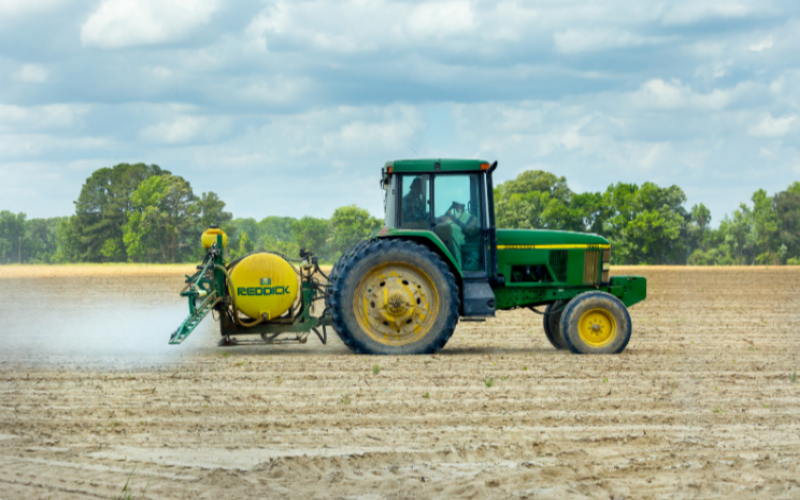
Farmers who have adopted this strategy begin by applying an aggressive pre-emergence residual. They follow it up with early applications of post-emergence residual herbicide.
It’s crucial that weeds don’t reach a 4-inch height. If waterhemp weeds are allowed to tower over the crops, the battle is already half lost. Applying the post-emergence residual herbicides early also helps the farmers better manage wind issues.

Lead Editor for Insight Weeds.