Dieffenbachia is an evergreen, broadleaf perennial in the Araceae family that can grow 1-3 m long with a spread of 0.6-1.5m. It is widely grown for its large, shiny, attractive foliage, typically marked with white, yellow, cream, and green variegation.
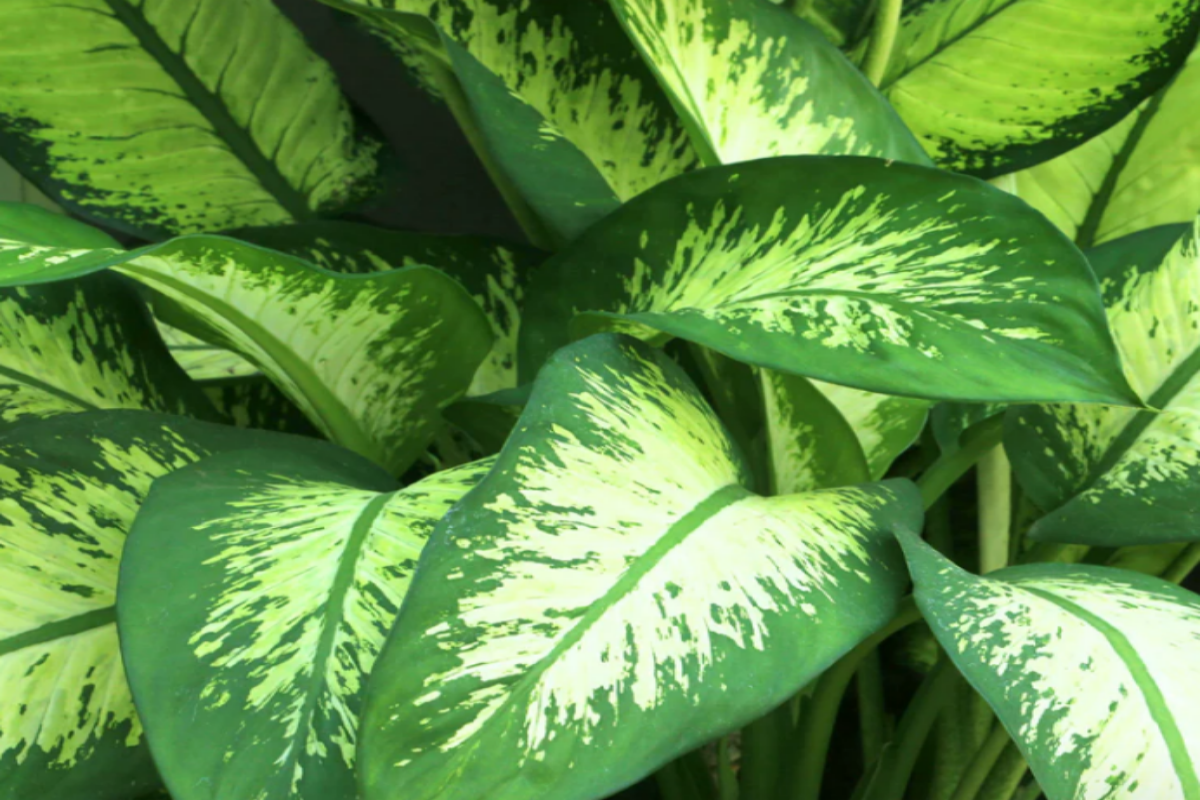
You can recognize the species by its broad, oval, attractive leaves and thick, fleshy, cane-like stems. Dumb Cane is native to tropical regions of Central and South America.
Dumb Cane Classification
- Domain: Eukaryota
- Kingdom: Plantae
- Phylum: Tracheophyta
- Subphylum: Angiospermae
- Class: Liliospida
- Order: Alismatales
- Family: Araceae
- Genus: Dieffenbachia
- Species: Multiple species, (40-60 recognized species) including Dieffenbachia seguine, Dieffenbachia amoena, Dieffenbachia maculata, and Dieffenbachia bowmannii
- Common Names: Dumb Cane, Dumbplant, Spotted Dumbcane, Variable Dieffenbachia, and Gold Dieffenbachia
Nativity and Distribution
Dumb Cane is native to Central and South America in countries, including Brazil, Peru, Panama, Colombia, and several Caribbean Islands.
As a popular houseplant, it is grown in many tropical, subtropical, and indoor environments globally.
Physical Characteristics
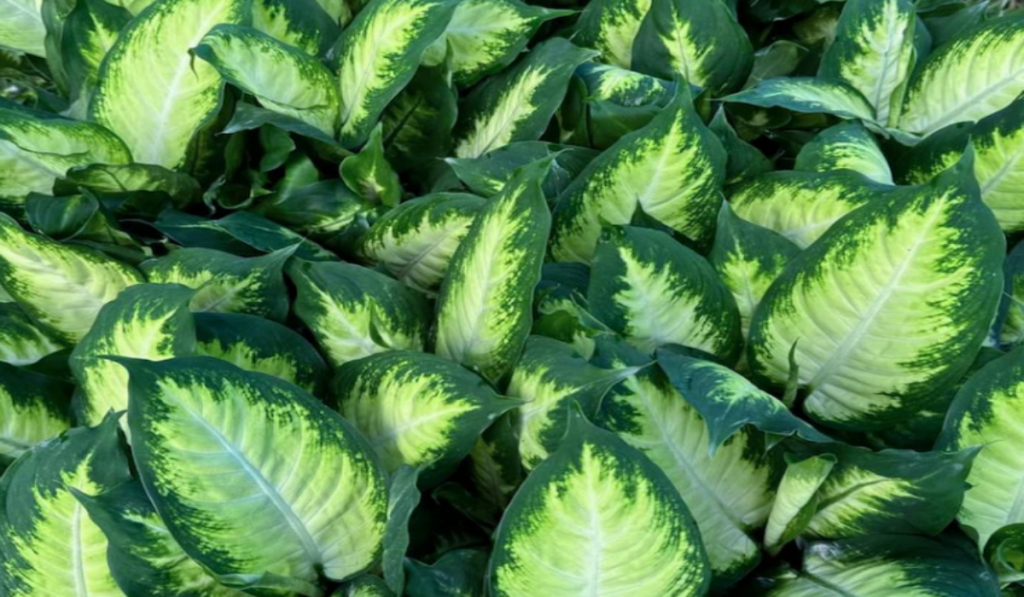
- Leaves: Alternate, large, mottled, with variegated shades, about 20-60 cm long
- Fruits: Small, berry-like drupes, orange to red in maturity
- Stems: Upright, thick, fleshy, cane-like stems
- Flowers: Inconspicuous, white to pale green spadix surrounded by a spathe
- Roots: Fibrous root system
Dumb Cane is an evergreen, broadleaf perennial in the Araceae family that can grow 1-3 m long, depending on the cultivar. It is widely grown for its large, shiny, attractive foliage, typically marked with white, yellow, cream, and green variegation. It is easily recognizable by its large, broad, oval attractive leaves and thick, fleshy, cane-like stems.
Stems are upright, thick, and cane-like, hence the name “Dumb Cane”. The prevalent thickness helps support the large leaves. When plants mature, the leaves drop, exposing the stout stems underneath.
Dumbplant leaves are alternate, large, broad, glossy, with pointed tips and about 20-60 cm long. The most distinguishing feature is the attractive variegation consisting of white, cream, yellow, and various shades of green across the leaf blade.
They grow in a spiral pattern along a thick petiole that wraps around the stem from the base.
Dieffenbachia produces an inconspicuous inflorescence consisting of a white to pale green spadix (flower-bearing structure) surrounded by a spathe (modified leaf).
The seed is small, round, and light brown to tan in colour when mature.
Reproduction, Dispersal, and Life Cycle
- Life Cycle: Perennial
- Seeds: It is not a prolific seed producer
- Climate: Thrives best in tropical and subtropical climates
- Dispersal: Split-falling, animals, and human activity
The Dieffenbachia plants are long-lived, evergreen, herbaceous perennials. Plants can survive many years while producing new leaves from the stem apex every growing season.
Many species are not prolific seed producers, and the seeds produced in native habitats often fall beneath the parent, are dispersed by animals, and through human cultivation. These seeds germinate in moist and warm conditions. In cooler seasons, indoor plants experience slow growth
While the plant can produce viable seeds, in horticulture, it is primarily propagated vegetatively. Broken stem sections readily root in ideal environmental conditions. As a popular houseplant, it is widely distributed through cuttings and nursery production.
Dieffenbachia thrives in well-drained, moist soil, partial shade, and moderate to high humidity. The plant species can tolerate seasonal droughts but are highly sensitive to frost and prolonged cold conditions.
Similar Plants
- Sygonium species
- Alocasia species
- Maranta species
Uses
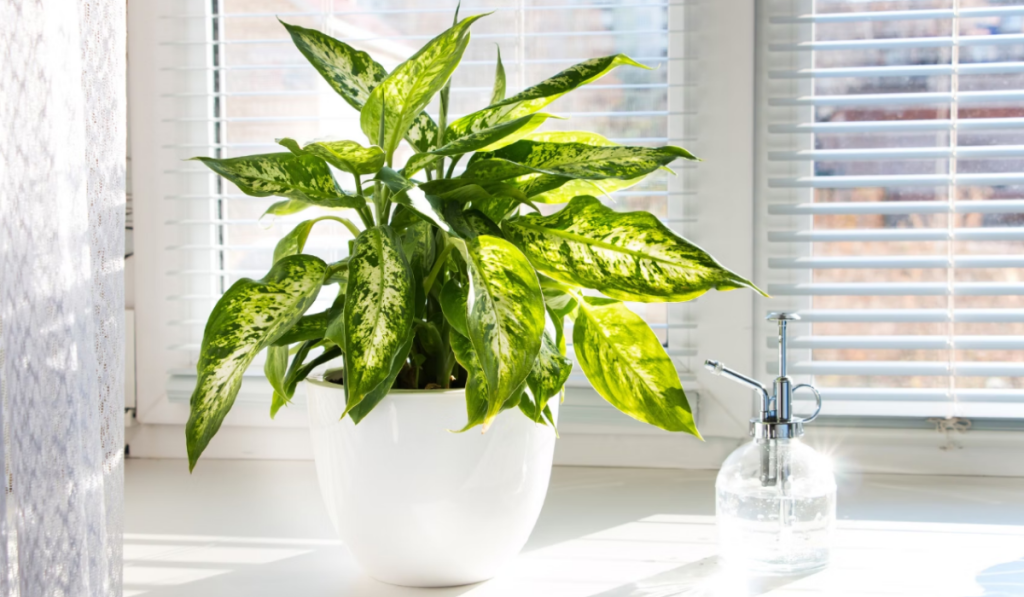
- It is an important indoor plant used to brighten homes, offices, and other indoor areas.
- The plant species supports many livelihoods through nursery production and sale, as it is one of the most sold ornamental plants worldwide.
- Some low-growing cultivars are used as tall groundcovers.
- The Dumb Cane is grown in closed environments to clear toxic organic substances like toluene.
- Despite its high toxicity, Dieffenbachia has been used as traditional medicine, food, and as a tool of punishment by various tribes in the Amazon.
Impact on Farms and Environment
Spotted Dumbcane is not considered an invasive plant where it is grown as an ornamental plant. However, escaped populations in tropical regions can establish in disturbed sites and outcompete native vegetation.
In native habitats, Dieffenbachia grows in large colonies but rarely becomes a problematic weed. Such habitats include forests, disturbed areas, and stream banks.
As one of the most toxic plants to humans, it is not recommended for outdoor cultivation. Indoor cultivation also requires careful handling to avoid accidental exposure.
Dieffenbachia sap contains calcium oxalate crystals known as raphides that can cause skin irritation. Ingestion can cause mouth swelling, pain, difficulty speaking, and temporary loss of speech, hence the name “Dumb Cane”. It is also toxic to dogs and cats if ingested.
Control
- Mechanical control: Pulling and digging
- Cultural control: Proper disposal of garden waste
Young plants and seedlings can be removed through pulling or digging. Ensure that the root system is completely removed to prevent regrowth. For larger clumps, cut the upper portions and excavate the underground parts carefully. Wear protective gloves to prevent irritation to the skin and eyes.
Proper disposal of garden waste is an important cultural measure in preventing accidental establishment. Maintaining healthy native vegetation can also discourage Dieffenbachia growth, because it is not a prolific producer.

Lead Editor for Insight Weeds.